
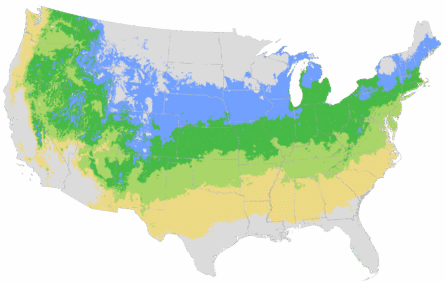
You're growing in this Zip Code:
Change LocationDiscover Plants for Your Area
Eichholz Cotoneaster
Cotoneaster dammeri 'Eichholz'
Pronunciation: ko-to-ne-AS-ter DAM-er-i
SKU #02910
LIGHT:
Full sun, Partial sun
WATER:
Once established water during dry spells.
SIZE:
Quickly reaches up to 1 ft. tall, spreading 8 to 10 ft. wide.

Retailers Near You
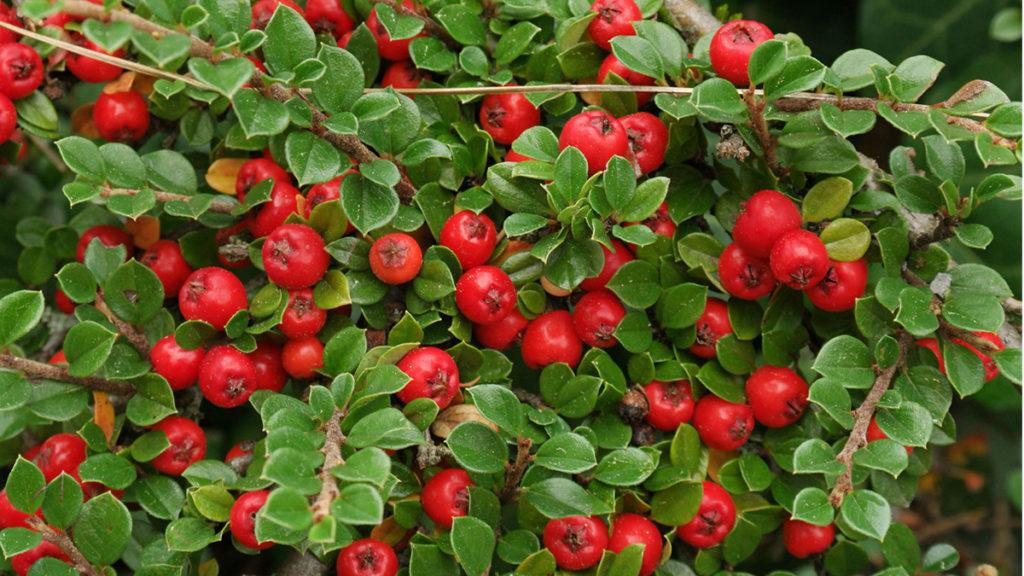

| Description | A very low-growing, wide-spreading groundcover with highly ornamental berries. Glossy, bright green leaves provide rich autumn color as they turn to gold to orange-red. Small white spring flowers develop into showy red fruit in fall. Evergreen. |
|---|---|
| Bloom Time | Spring |
| Deciduous/Evergreen | Evergreen |
| Special Features | Fall Color, Ornamental Berries, Waterwise, Attracts Pollinators, Fast Growing, Compact Form, Benefits Birds |
| Problems/Solutions | Coastal Exposure, Deer Resistant, Erosion Control, Rabbit Resistant, Tolerates Urban Pollution, Road Salt Tolerant |
| Growth Rate | Fast |
| Growth Habit | Spreading |
| Flower Attributes | Showy Flowers |
| Landscape Use | Border, Ground Cover, Hillside |
| Design Ideas | Excellent cover for a gentle slope or for filling long planting areas near a walkway. A great plant for nestling boulders, particularly rocky outcroppings in association with waterfalls. Makes an interesting container plant for semi-bonsai looks and modern applications. . |
| Flower Color | White |
| Foliage Color | Green |
| Foliage Fall Color | Red |
| Companion Plants | Dogwood (Cornus); Cranberry Bush (Viburnum); Magnolia (Magnolia); Juniper (Juniperus); Rose (Rosa) |
| Care Instructions | Grows easily in average to poor, well-drained soils. Space 5 to 6 ft. apart as groundcover; control weeds with mulch until plants fill in. Water deeply and regularly during the first growing season to establish an extensive root system; reduce frequency once established. Apply fertilizer in early spring. May be pruned annually to shape. |
| Lore | The genus Cotoneaster translates from the Latin for quince-like, which described the leaves of some species. |
Details
| Description | A very low-growing, wide-spreading groundcover with highly ornamental berries. Glossy, bright green leaves provide rich autumn color as they turn to gold to orange-red. Small white spring flowers develop into showy red fruit in fall. Evergreen. |
|---|---|
| Bloom Time | Spring |
| Deciduous/Evergreen | Evergreen |
| Special Features | Fall Color, Ornamental Berries, Waterwise, Attracts Pollinators, Fast Growing, Compact Form, Benefits Birds |
| Problems/Solutions | Coastal Exposure, Deer Resistant, Erosion Control, Rabbit Resistant, Tolerates Urban Pollution, Road Salt Tolerant |
| Growth Rate | Fast |
| Growth Habit | Spreading |
| Flower Attributes | Showy Flowers |
Style
| Landscape Use | Border, Ground Cover, Hillside |
|---|---|
| Design Ideas | Excellent cover for a gentle slope or for filling long planting areas near a walkway. A great plant for nestling boulders, particularly rocky outcroppings in association with waterfalls. Makes an interesting container plant for semi-bonsai looks and modern applications. . |
| Flower Color | White |
| Foliage Color | Green |
| Foliage Fall Color | Red |
| Companion Plants | Dogwood (Cornus); Cranberry Bush (Viburnum); Magnolia (Magnolia); Juniper (Juniperus); Rose (Rosa) |
Care
| Care Instructions | Grows easily in average to poor, well-drained soils. Space 5 to 6 ft. apart as groundcover; control weeds with mulch until plants fill in. Water deeply and regularly during the first growing season to establish an extensive root system; reduce frequency once established. Apply fertilizer in early spring. May be pruned annually to shape. |
|---|
History
| Lore | The genus Cotoneaster translates from the Latin for quince-like, which described the leaves of some species. |
|---|
Retailers Near You
About Us
We have been pioneers and craftsmen in the art of growing plants for 100 years. Since our founding in Southern California by Harry E. Rosedale, Sr. in 1926, we have been absolutely dedicated and obsessed with quality.
We have been pioneers and craftsmen in the art of growing plants for nearly 100 years. Since our founding in Southern California by Harry E. Rosedale, Sr. in 1926, we have been absolutely dedicated and obsessed with quality.