
You're growing in this Zip Code:
Change LocationDiscover Plants for Your Area
Red Rhapsody® Amur Maple
Acer tataricum subsp. ginnala 'Mondy'
Pronunciation: AY-ser tat-TAR-ee-kum jin-NAY-luh
SKU #00048
LIGHT:
Full sun, Partial sun
WATER:
Keep soil consistently moist but not soggy.
SIZE:
Quickly reaches 15 to 20 ft. tall and wide.

Retailers Near You
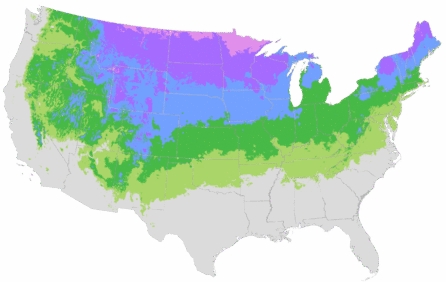
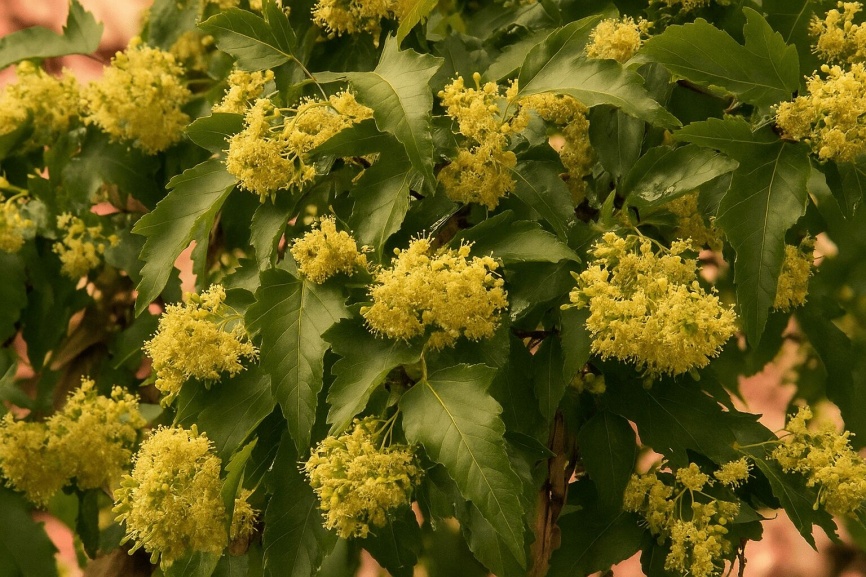

| Description | Brilliant red fall foliage highlights this small, versatile, bushy tree. The wonderful bare-stemmed winter silhouette with smooth gray bark leafs out before other maples in spring, with heavily lobed, dark green foliage, followed by small, fragrant, yellow-white flower clusters. Excellent cold tolerance. Best fall color in cool northern regions. |
|---|---|
| Bloom Time | Spring |
| Deciduous/Evergreen | Deciduous |
| Special Features | Dramatic Foliage Color, Fall Color, Fast Growing |
| Growth Rate | Fast |
| Growth Habit | Rounded |
| Landscape Use | Border |
| Design Ideas | Ideally sized accent tree for smaller home sites in beds and borders or as a foundation planting stand out. Use as seasonal front yard attention-getter or for a long range view out back. Can be utilized in groves for creative color compositions. Adapts well to wild gardens providing big maple looks in limited spaces. An excellent plant for a Japanese-style garden, mixed with airy, deciduous small trees and dense conifers. |
| Flower Color | White |
| Foliage Color | Dark Green |
| Foliage Fall Color | Red |
| Companion Plants | Lily of the Valley Shrub (Pieris); Azalea (Azalea); Mugo Pine (Pinus); Mountain Laurel (Kalmia); Astilbe (Astilbe) |
| Care Instructions | Thrives in enriched, evenly moist well-drained soil, but adaptable to most soil conditions. Water deeply, regularly during first few growing seasons to establish an extensive root system. Once established water regularly to maintain evenly moist soil; tolerates mild drought. Apply fertilizer before new growth begins in spring. |
| History | The parent species of this hybrid developed and introduced in 1991 by Monrovia is A. ginnala, a native to most of China, Korea and Japan. It was first introduced as A. tataricum by Franchet of Paris from seed sent west from Jesuits in China. It was also introduced by Maximowiz via Russia under its current classification, named ginnala from its common name in China. |
| Lore | The genus Acer was named from the old world Latin name for this tribe of trees in Europe. |
Details
| Description | Brilliant red fall foliage highlights this small, versatile, bushy tree. The wonderful bare-stemmed winter silhouette with smooth gray bark leafs out before other maples in spring, with heavily lobed, dark green foliage, followed by small, fragrant, yellow-white flower clusters. Excellent cold tolerance. Best fall color in cool northern regions. |
|---|---|
| Bloom Time | Spring |
| Deciduous/Evergreen | Deciduous |
| Special Features | Dramatic Foliage Color, Fall Color, Fast Growing |
| Growth Rate | Fast |
| Growth Habit | Rounded |
Style
| Landscape Use | Border |
|---|---|
| Design Ideas | Ideally sized accent tree for smaller home sites in beds and borders or as a foundation planting stand out. Use as seasonal front yard attention-getter or for a long range view out back. Can be utilized in groves for creative color compositions. Adapts well to wild gardens providing big maple looks in limited spaces. An excellent plant for a Japanese-style garden, mixed with airy, deciduous small trees and dense conifers. |
| Flower Color | White |
| Foliage Color | Dark Green |
| Foliage Fall Color | Red |
| Companion Plants | Lily of the Valley Shrub (Pieris); Azalea (Azalea); Mugo Pine (Pinus); Mountain Laurel (Kalmia); Astilbe (Astilbe) |
Care
| Care Instructions | Thrives in enriched, evenly moist well-drained soil, but adaptable to most soil conditions. Water deeply, regularly during first few growing seasons to establish an extensive root system. Once established water regularly to maintain evenly moist soil; tolerates mild drought. Apply fertilizer before new growth begins in spring. |
|---|
History
| History | The parent species of this hybrid developed and introduced in 1991 by Monrovia is A. ginnala, a native to most of China, Korea and Japan. It was first introduced as A. tataricum by Franchet of Paris from seed sent west from Jesuits in China. It was also introduced by Maximowiz via Russia under its current classification, named ginnala from its common name in China. |
|---|---|
| Lore | The genus Acer was named from the old world Latin name for this tribe of trees in Europe. |
Retailers Near You
About Us
We have been pioneers and craftsmen in the art of growing plants for 100 years. Since our founding in Southern California by Harry E. Rosedale, Sr. in 1926, we have been absolutely dedicated and obsessed with quality.
We have been pioneers and craftsmen in the art of growing plants for nearly 100 years. Since our founding in Southern California by Harry E. Rosedale, Sr. in 1926, we have been absolutely dedicated and obsessed with quality.