
You're growing in this Zip Code:
Change LocationDiscover Plants for Your Area
Scarlet Bottlebrush
Callistemon citrinus
Pronunciation: kal-LIS-tem-on si-TRI-nus
SKU #01435
LIGHT:
Full sun
WATER:
Once established, water if very dry.
SIZE:
Reaches 10 to 12 ft. tall and wide in 10 years; slightly larger with age.

Retailers Near You
Ready to Grow?
Ship Monrovia plants directly to your door. Browse a curated selection available online.
Shop Now >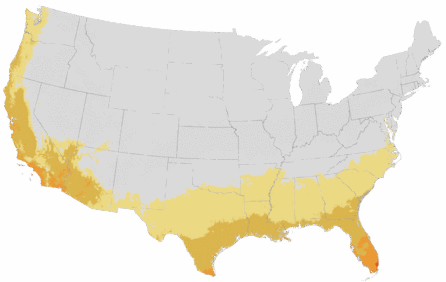

| Description | A wonderfully carefree evergreen shrub with masses of showy, scarlet, bottle brush-shaped flowers. A very dramatic accent, hedge or screen plant with leathery gray-green foliage that provides year-round interest. Tolerates poor soils, heat and mild drought when established. |
|---|---|
| Bloom Time | Spring to summer; longer in temperate regions |
| Deciduous/Evergreen | Evergreen |
| Special Features | Attracts Hummingbirds, Easy Care, Waterwise, Non-toxic to Cats and Dogs, Attracts Pollinators |
| Problems/Solutions | Coastal Exposure, Deer Resistant, Drought Tolerant |
| Growth Rate | Moderate |
| Growth Habit | Rounded |
| Flower Attributes | Flowers for Cutting, Long Bloom Season, Showy Flowers |
| Landscape Use | Border, Hedge, Privacy Screen |
| Flower Color | Red |
| Foliage Color | Gray-green |
| Companion Plants | Strawberry Tree (Arbutus); Euryops (Euryops); African Iris (Dietes); Sedum (Sedum); Aloe (Aloe); Agave (Agave); Echeveria (Echeveria) |
| Care Instructions | Thrives in average, lightly acidic, well-drained soil; avoid alkaline soils. Water deeply, regularly during first growing season to establish an extensive root system; reduce frequency once established. More drought tolerant in coastal areas; less tolerant in hot, arid regions. Apply fertilizer in early spring. Prune to shape after flowering. |
Details
| Description | A wonderfully carefree evergreen shrub with masses of showy, scarlet, bottle brush-shaped flowers. A very dramatic accent, hedge or screen plant with leathery gray-green foliage that provides year-round interest. Tolerates poor soils, heat and mild drought when established. |
|---|---|
| Bloom Time | Spring to summer; longer in temperate regions |
| Deciduous/Evergreen | Evergreen |
| Special Features | Attracts Hummingbirds, Easy Care, Waterwise, Non-toxic to Cats and Dogs, Attracts Pollinators |
| Problems/Solutions | Coastal Exposure, Deer Resistant, Drought Tolerant |
| Growth Rate | Moderate |
| Growth Habit | Rounded |
| Flower Attributes | Flowers for Cutting, Long Bloom Season, Showy Flowers |
Style
| Landscape Use | Border, Hedge, Privacy Screen |
|---|---|
| Flower Color | Red |
| Foliage Color | Gray-green |
| Companion Plants | Strawberry Tree (Arbutus); Euryops (Euryops); African Iris (Dietes); Sedum (Sedum); Aloe (Aloe); Agave (Agave); Echeveria (Echeveria) |
Care
| Care Instructions | Thrives in average, lightly acidic, well-drained soil; avoid alkaline soils. Water deeply, regularly during first growing season to establish an extensive root system; reduce frequency once established. More drought tolerant in coastal areas; less tolerant in hot, arid regions. Apply fertilizer in early spring. Prune to shape after flowering. |
|---|
Frequently asked questions
Does Scarlet Bottlebrush produce flowers?
Spring to summer; longer in temperate regions
Is Scarlet Bottlebrush evergreen or deciduous?
Scarlet Bottlebrush is Evergreen.
What are the special features of Scarlet Bottlebrush?
Scarlet Bottlebrush is Attracts Hummingbirds, Easy Care, Waterwise, Non-toxic to Cats and Dogs, Attracts Pollinators.
Is Scarlet Bottlebrush resistant to pests or animals?
Coastal Exposure, Deer Resistant, Drought Tolerant
How fast does Scarlet Bottlebrush grow?
Scarlet Bottlebrush has a Moderate growth rate.
What is the growth habit of Scarlet Bottlebrush?
Scarlet Bottlebrush grows in an Rounded habit.
Where can I use Scarlet Bottlebrush in my landscape?
Scarlet Bottlebrush is suitable for: Border, Hedge, Privacy Screen.
What color are Scarlet Bottlebrush flowers?
Scarlet Bottlebrush produces Red flowers.
What color is the foliage of Scarlet Bottlebrush?
Scarlet Bottlebrush has Gray-green foliage.
What plants grow well with Scarlet Bottlebrush?
Good companion plants for Scarlet Bottlebrush include: Strawberry Tree (Arbutus); Euryops (Euryops); African Iris (Dietes); Sedum (Sedum); Aloe (Aloe); Agave (Agave); Echeveria (Echeveria).
How do I care for Scarlet Bottlebrush?
Thrives in average, lightly acidic, well-drained soil; avoid alkaline soils. Water deeply, regularly during first growing season to establish an extensive root system; reduce frequency once established. More drought tolerant in coastal areas; less tolerant in hot, arid regions. Apply fertilizer in early spring. Prune to shape after flowering.
Retailers Near You
About Us
We have been pioneers and craftsmen in the art of growing plants for 100 years. Since our founding in Southern California by Harry E. Rosedale, Sr. in 1926, we have been absolutely dedicated and obsessed with quality.
We have been pioneers and craftsmen in the art of growing plants for nearly 100 years. Since our founding in Southern California by Harry E. Rosedale, Sr. in 1926, we have been absolutely dedicated and obsessed with quality.