
You're growing in this Zip Code:
Change LocationDiscover Plants for Your Area
Scarlet Torch™ Bottlebrush
Callistemon rigidus 'RutCall' PP #23,848
Pronunciation: kal-LIS-tem-on RIG-ih-dus
SKU #04676
LIGHT:
Full sun
WATER:
Once established, water if very dry.
SIZE:
Moderate growing; reaches 9 ft. tall, 12 ft. wide in 10 years.

Retailers Near You
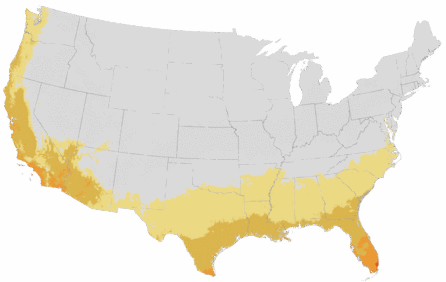

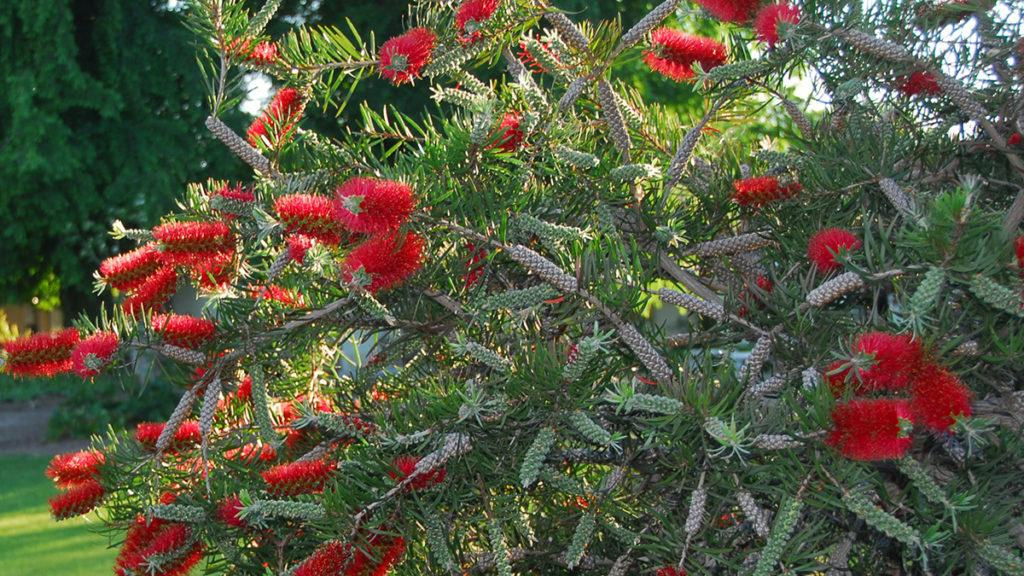

| Description | Prolific, crimson-red bottlebrush-like flowers are sure to brighten the landscape. This new introduction from the University of Georgia has larger blooms than other varieties and a nice rounded habit. Ideal for minimal-care gardens, it maintains its compact size with little to no pruning. Evergreen. |
|---|---|
| Bloom Time | Spring to summer; longer in temperate regions |
| Deciduous/Evergreen | Evergreen |
| Special Features | Easy Care, Waterwise, Non-toxic to Cats and Dogs, Attracts Pollinators, Compact Form |
| Problems/Solutions | Coastal Exposure, Deer Resistant |
| Growth Rate | Moderate |
| Flower Attributes | Flowers for Cutting, Repeat Flowering, Showy Flowers |
| Patent Act | Asexual reproduction of plants protected by the Plant Patent Act is prohibited during the life of the patent. |
| Landscape Use | Border, Container, Hedge |
| Design Ideas | This waterwise evergreen shrub or small tree makes a wonderful specimen or hedge in frost free areas. In northern climates, provides fantastic color to summer gardens. Trained as a small patio tree, use to accent shrub borders or feature in large patio tubs. |
| Flower Color | Red |
| Foliage Color | Gray-green |
| Companion Plants | Eucalyptus (Eucalyptus); Agave (Agave); Euryops (Euryops); Maiden Grass (Miscanthus); Photinia (Photinia); Strawberry Tree (Arbutus) |
| Care Instructions | Thrives in average, neutral to slightly acidic, well-drained soil; avoid alkaline soils. Benefits from winter protection in zone 8. Water deeply and regularly during first growing season to establish an extensive root system; reduce frequency when established. Apply fertilizer before new growth begins in spring. Prune to shape after flowering. |
| History | Bred by Dr. John Ruter at the Tifton Research Center at the University of Georgia. |
| Lore | The genus name Callistemon comes from the Greek words for beautiful (callis) and stamen (stemon) in reference to the flowers, which feature showy red stamens that encircle the stem in cylindrical spikes. Flowers are followed by small brown, button-like seed capsules. |
Details
| Description | Prolific, crimson-red bottlebrush-like flowers are sure to brighten the landscape. This new introduction from the University of Georgia has larger blooms than other varieties and a nice rounded habit. Ideal for minimal-care gardens, it maintains its compact size with little to no pruning. Evergreen. |
|---|---|
| Bloom Time | Spring to summer; longer in temperate regions |
| Deciduous/Evergreen | Evergreen |
| Special Features | Easy Care, Waterwise, Non-toxic to Cats and Dogs, Attracts Pollinators, Compact Form |
| Problems/Solutions | Coastal Exposure, Deer Resistant |
| Growth Rate | Moderate |
| Flower Attributes | Flowers for Cutting, Repeat Flowering, Showy Flowers |
| Patent Act | Asexual reproduction of plants protected by the Plant Patent Act is prohibited during the life of the patent. |
Style
| Landscape Use | Border, Container, Hedge |
|---|---|
| Design Ideas | This waterwise evergreen shrub or small tree makes a wonderful specimen or hedge in frost free areas. In northern climates, provides fantastic color to summer gardens. Trained as a small patio tree, use to accent shrub borders or feature in large patio tubs. |
| Flower Color | Red |
| Foliage Color | Gray-green |
| Companion Plants | Eucalyptus (Eucalyptus); Agave (Agave); Euryops (Euryops); Maiden Grass (Miscanthus); Photinia (Photinia); Strawberry Tree (Arbutus) |
Care
| Care Instructions | Thrives in average, neutral to slightly acidic, well-drained soil; avoid alkaline soils. Benefits from winter protection in zone 8. Water deeply and regularly during first growing season to establish an extensive root system; reduce frequency when established. Apply fertilizer before new growth begins in spring. Prune to shape after flowering. |
|---|
History
| History | Bred by Dr. John Ruter at the Tifton Research Center at the University of Georgia. |
|---|---|
| Lore | The genus name Callistemon comes from the Greek words for beautiful (callis) and stamen (stemon) in reference to the flowers, which feature showy red stamens that encircle the stem in cylindrical spikes. Flowers are followed by small brown, button-like seed capsules. |
Retailers Near You
About Us
We have been pioneers and craftsmen in the art of growing plants for 100 years. Since our founding in Southern California by Harry E. Rosedale, Sr. in 1926, we have been absolutely dedicated and obsessed with quality.
We have been pioneers and craftsmen in the art of growing plants for nearly 100 years. Since our founding in Southern California by Harry E. Rosedale, Sr. in 1926, we have been absolutely dedicated and obsessed with quality.