
You're growing in this Zip Code:
Discover Plants for Your Area


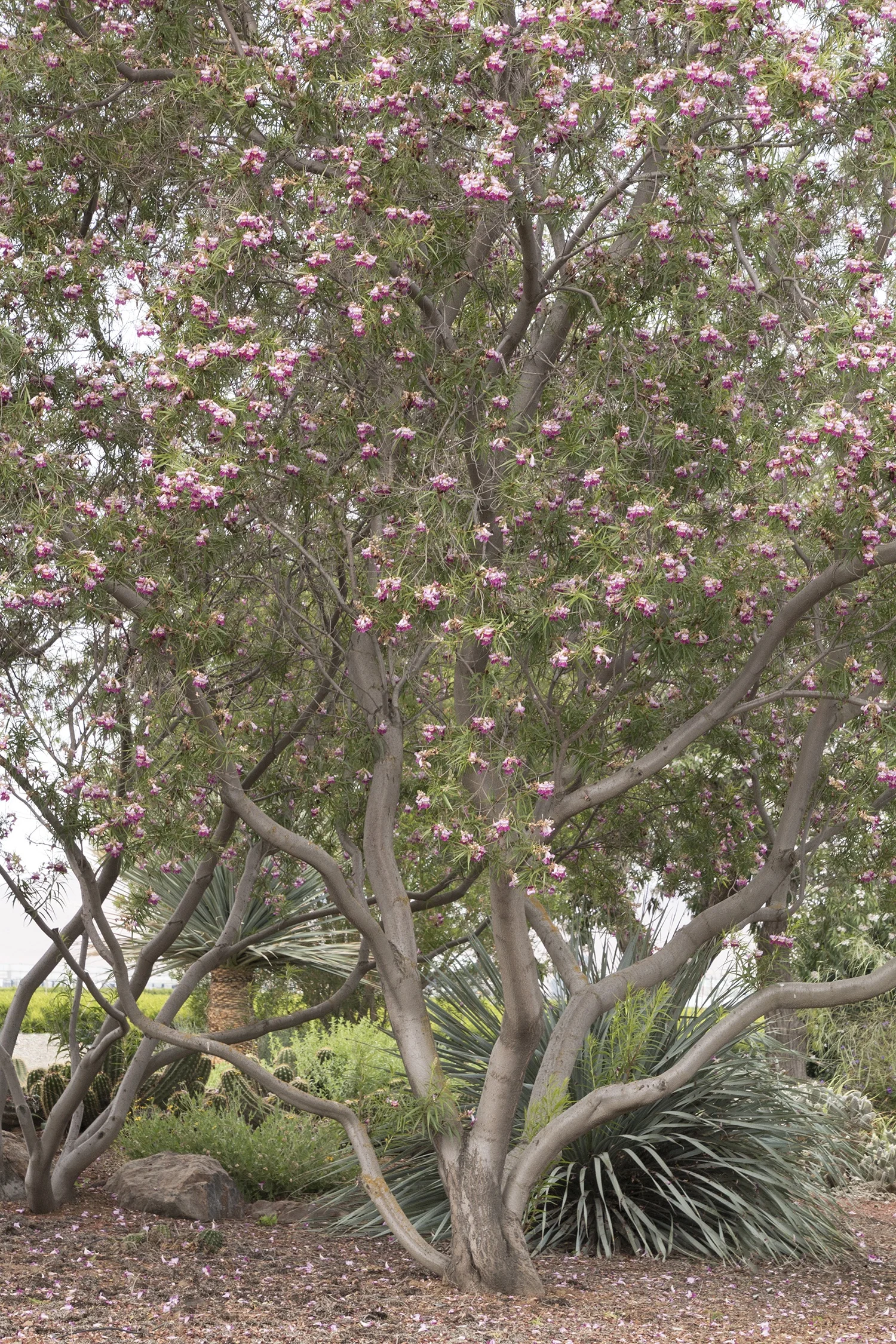
Timeless Beauty® Desert Willow
Chilopsis linearis 'Monhews'
Pronunciation: KY-lop-sis lin-e-A-ris
SKU #02415
LIGHT:
Full sun
WATER:
Once established, water if very dry.
SIZE:
Moderate growing; reaches 15 to 20 ft. tall and wide.

Retailers Near You
Ready to Grow?
Ship Monrovia plants directly to your door. Browse a curated selection available online.
Shop Now >This Plant's Growing Zones: 7-11
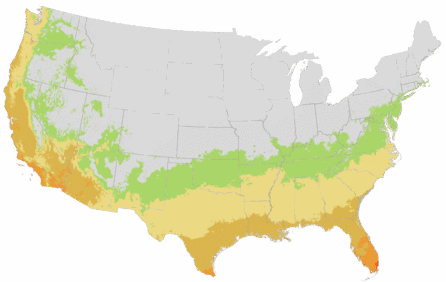
Your USDA Cold Hardiness Zone:
| Description | A unique selection notable for its long bloom period. Fragrant, tubular, burgundy and pale lavender blooms appear in clusters at branch ends; flowers do not set seed. Gorgeous specimen to anchor a border, or as a large patio container feature. Ideal for firescaping. Deciduous to semi-evergreen. |
|---|---|
| Bloom Time | Spring through summer |
| Deciduous/Evergreen | Deciduous |
| Special Features | Attracts Hummingbirds, Easy Care, Waterwise, Attracts Pollinators, Heat Loving |
| Problems/Solutions | Drought Tolerant |
| Growth Rate | Moderate |
| Growth Habit | Weeping |
| Flower Attributes | Fragrant, Long Bloom Season, Showy Flowers |
| Patent Act | Asexual reproduction of plants protected by the Plant Patent Act is prohibited during the life of the patent. |
| Landscape Use | Border, Container |
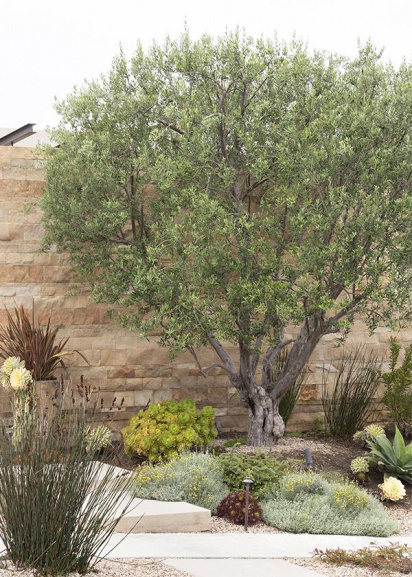
| Design Ideas | A most drought and heat resistant flowering tree makes the ideal specimen plant for water challenged communities. Plant in the front yard to call attention to an entry. Use in back as a focal point for oft used windows and sliders. Plant a few around patios for a sense of enclosure and light filtered shade at maturity. Makes an excellent sideyard privacy screen with flowers for interest from adjacent windows. Useful tree for screening off RVs, drying yards, utility areas and undesirable land uses. Great plant for hiding swimming pool safety fencing, particularly chain link. |
| Flower Color | Purple |
| Foliage Color | Green |
| Companion Plants | Indian Hawthorn (Rhaphiolepis); New Zealand Flax (Phormium); Rock Rose (Cistus); Yucca (Yucca); Mexican Blue Sage (Salvia) |
| Care Instructions | Grows easily in a wide range of conditions including alkaline soil, sand, clay, and heavy seasonal moisture. Water deeply, regularly during first growing season to establish an extensive root system. Once established, reduce frequency; tolerates seasonal drought. Apply fertilizer before new growth begins in spring. |
| History | This improved desert willow cultivar was introduced by Monrovia. Chilopsis is classified in the Bignoniaceae of trumpet flowers and related to the catalpa tree. Genus name was derived from the Greek for lip-like, which refers to the mouth-like shape of the flower opening. The species C. linearis was classified by Robert Sweet. It is found in deserts from California south into Mexico and through Texas. |
| Lore | This native of the desert Southwest is found in dry washes of the low desert including the Mohave and Colorado deserts. |
Details
| Description | A unique selection notable for its long bloom period. Fragrant, tubular, burgundy and pale lavender blooms appear in clusters at branch ends; flowers do not set seed. Gorgeous specimen to anchor a border, or as a large patio container feature. Ideal for firescaping. Deciduous to semi-evergreen. |
|---|---|
| Bloom Time | Spring through summer |
| Deciduous/Evergreen | Deciduous |
| Special Features | Attracts Hummingbirds, Easy Care, Waterwise, Attracts Pollinators, Heat Loving |
| Problems/Solutions | Drought Tolerant |
| Growth Rate | Moderate |
| Growth Habit | Weeping |
| Flower Attributes | Fragrant, Long Bloom Season, Showy Flowers |
| Patent Act | Asexual reproduction of plants protected by the Plant Patent Act is prohibited during the life of the patent. |
Style
| Landscape Use | Border, Container |
|---|---|
| Design Ideas | A most drought and heat resistant flowering tree makes the ideal specimen plant for water challenged communities. Plant in the front yard to call attention to an entry. Use in back as a focal point for oft used windows and sliders. Plant a few around patios for a sense of enclosure and light filtered shade at maturity. Makes an excellent sideyard privacy screen with flowers for interest from adjacent windows. Useful tree for screening off RVs, drying yards, utility areas and undesirable land uses. Great plant for hiding swimming pool safety fencing, particularly chain link. |
| Flower Color | Purple |
| Foliage Color | Green |
| Companion Plants | Indian Hawthorn (Rhaphiolepis); New Zealand Flax (Phormium); Rock Rose (Cistus); Yucca (Yucca); Mexican Blue Sage (Salvia) |
Care
| Care Instructions | Grows easily in a wide range of conditions including alkaline soil, sand, clay, and heavy seasonal moisture. Water deeply, regularly during first growing season to establish an extensive root system. Once established, reduce frequency; tolerates seasonal drought. Apply fertilizer before new growth begins in spring. |
|---|
History
| History | This improved desert willow cultivar was introduced by Monrovia. Chilopsis is classified in the Bignoniaceae of trumpet flowers and related to the catalpa tree. Genus name was derived from the Greek for lip-like, which refers to the mouth-like shape of the flower opening. The species C. linearis was classified by Robert Sweet. It is found in deserts from California south into Mexico and through Texas. |
|---|---|
| Lore | This native of the desert Southwest is found in dry washes of the low desert including the Mohave and Colorado deserts. |
Retailers Near You
About Us
We have been pioneers and craftsmen in the art of growing plants for 100 years. Since our founding in Southern California by Harry E. Rosedale, Sr. in 1926, we have been absolutely dedicated and obsessed with quality.
We have been pioneers and craftsmen in the art of growing plants for nearly 100 years. Since our founding in Southern California by Harry E. Rosedale, Sr. in 1926, we have been absolutely dedicated and obsessed with quality.