
You're growing in this Zip Code:
Change LocationDiscover Plants for Your Area
Exclusive
Angel Red® Pomegranate
Punica granatum 'Smith'
Pronunciation: PEW-ni-ka gra-NAY-tum
SKU #06801
LIGHT:
Full sun
WATER:
Water when top 2 inches of soil is dry.
SIZE:
Moderate growing; reaches 10 ft. tall and wide.

Retailers Near You
Ready to Grow?
Ship Monrovia plants directly to your door. Browse a curated selection available online.
Shop Now >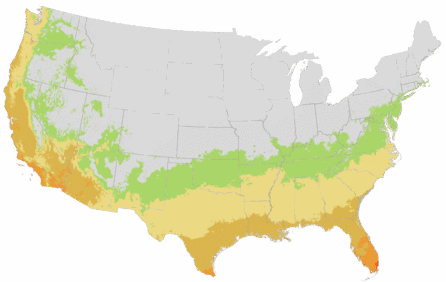
| Description | Simply the best pomegranate on the market! Large, showy, bright, orange-red blooms on upright, fount-like branches produce large, vivid red fruit that ripens late summer to fall. Less pulp and higher juice content than others, with seeds soft enough to be eaten fresh. Deciduous. |
|---|---|
| Bloom Time | Late winter to spring |
| Deciduous/Evergreen | Deciduous |
| Special Features | Attracts Hummingbirds, Easy Care, Fall Color, Showy Fruit, Waterwise, Edible, Attracts Pollinators |
| Problems/Solutions | Deer Resistant, Rabbit Resistant, Drought Tolerant |
| Growth Rate | Moderate |
| Flower Attributes | Showy Flowers |
| Patent Act | Asexual reproduction of plants protected by the Plant Patent Act is prohibited during the life of the patent. |
| Landscape Use | Container, Espalier, Hedge |
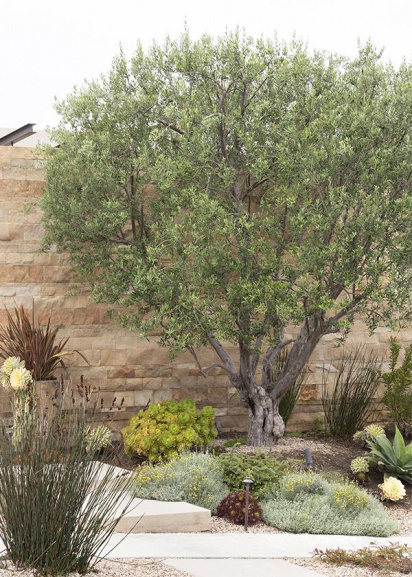
| Design Ideas | Pomegranate is exceptional for Mediterranean style gardens as well as most xeriscape settings, though the fruit is highest quality with supplemental water during flowering and fruiting season.This is an excellent choice for a courtyard specimen. Grow in fruit orchard or kitchen gardens. Excellent fruit producer in very hot gardens with difficult soils. |
| Flower Color | Orange |
| Foliage Color | Dark Green |
| Foliage Fall Color | Yellow |
| Companion Plants | Italian Cypress (Cupressa); Lavender (Lavandula); Bay Laurel (Laurus); Rosemary (Rosmarinus); Meyer Lemon (Citrus) |
| Care Instructions | Provide average, well-drained soil. Water deeply, regularly during the first few growing seasons to establish an extensive root system. When established, reduce frequency after fruit ripens, and increase during bloom period; tolerates moderate drought. Fertilize before new growth appears in spring. Prune annually, to shape. |
| History | Angel Red was discovered as a sport growing among other varieties of pomegranate trees. Tests showed it is a unique and gourmet pomegranate. The name Angel Red® was derived from the original, "Ryan's Angel Red". Ryan was involved in developing this variety, but tragically died at the age of 23. |
| Lore | The single genus of the family Punciaceae was classified by Linnaeus who Latinized the ancient name, Malum puncium, which translates to "apple of Carthage" which was its early common name. Pomegranate fruit came to symbolize fertility due to its abundance of seeds. |
Details
| Description | Simply the best pomegranate on the market! Large, showy, bright, orange-red blooms on upright, fount-like branches produce large, vivid red fruit that ripens late summer to fall. Less pulp and higher juice content than others, with seeds soft enough to be eaten fresh. Deciduous. |
|---|---|
| Bloom Time | Late winter to spring |
| Deciduous/Evergreen | Deciduous |
| Special Features | Attracts Hummingbirds, Easy Care, Fall Color, Showy Fruit, Waterwise, Edible, Attracts Pollinators |
| Problems/Solutions | Deer Resistant, Rabbit Resistant, Drought Tolerant |
| Growth Rate | Moderate |
| Flower Attributes | Showy Flowers |
| Patent Act | Asexual reproduction of plants protected by the Plant Patent Act is prohibited during the life of the patent. |
Style
| Landscape Use | Container, Espalier, Hedge |
|---|---|
| Design Ideas | Pomegranate is exceptional for Mediterranean style gardens as well as most xeriscape settings, though the fruit is highest quality with supplemental water during flowering and fruiting season.This is an excellent choice for a courtyard specimen. Grow in fruit orchard or kitchen gardens. Excellent fruit producer in very hot gardens with difficult soils. |
| Flower Color | Orange |
| Foliage Color | Dark Green |
| Foliage Fall Color | Yellow |
| Companion Plants | Italian Cypress (Cupressa); Lavender (Lavandula); Bay Laurel (Laurus); Rosemary (Rosmarinus); Meyer Lemon (Citrus) |
Care
| Care Instructions | Provide average, well-drained soil. Water deeply, regularly during the first few growing seasons to establish an extensive root system. When established, reduce frequency after fruit ripens, and increase during bloom period; tolerates moderate drought. Fertilize before new growth appears in spring. Prune annually, to shape. |
|---|
History
| History | Angel Red was discovered as a sport growing among other varieties of pomegranate trees. Tests showed it is a unique and gourmet pomegranate. The name Angel Red® was derived from the original, "Ryan's Angel Red". Ryan was involved in developing this variety, but tragically died at the age of 23. |
|---|---|
| Lore | The single genus of the family Punciaceae was classified by Linnaeus who Latinized the ancient name, Malum puncium, which translates to "apple of Carthage" which was its early common name. Pomegranate fruit came to symbolize fertility due to its abundance of seeds. |
Frequently asked questions
Does Angel Red® Pomegranate produce flowers?
Late winter to spring
Is Angel Red® Pomegranate evergreen or deciduous?
Angel Red® Pomegranate is Deciduous.
What are the special features of Angel Red® Pomegranate?
Angel Red® Pomegranate is Attracts Hummingbirds, Easy Care, Fall Color, Showy Fruit, Waterwise, Edible, Attracts Pollinators.
Is Angel Red® Pomegranate resistant to pests or animals?
Deer Resistant, Rabbit Resistant, Drought Tolerant
How fast does Angel Red® Pomegranate grow?
Angel Red® Pomegranate has a Moderate growth rate.
Where can I use Angel Red® Pomegranate in my landscape?
Angel Red® Pomegranate is suitable for: Container, Espalier, Hedge.
How can I use Angel Red® Pomegranate in my garden design?
Pomegranate is exceptional for Mediterranean style gardens as well as most xeriscape settings, though the fruit is highest quality with supplemental water during flowering and fruiting season.This is an excellent choice for a courtyard specimen. Grow in fruit orchard or kitchen gardens. Excellent fruit producer in very hot gardens with difficult soils.
What color are Angel Red® Pomegranate flowers?
Angel Red® Pomegranate produces Orange flowers.
What color is the foliage of Angel Red® Pomegranate?
Angel Red® Pomegranate has Dark Green foliage.
What plants grow well with Angel Red® Pomegranate?
Good companion plants for Angel Red® Pomegranate include: Italian Cypress (Cupressa); Lavender (Lavandula); Bay Laurel (Laurus); Rosemary (Rosmarinus); Meyer Lemon (Citrus).
How do I care for Angel Red® Pomegranate?
Provide average, well-drained soil. Water deeply, regularly during the first few growing seasons to establish an extensive root system. When established, reduce frequency after fruit ripens, and increase during bloom period; tolerates moderate drought. Fertilize before new growth appears in spring. Prune annually, to shape.
What is the history of Angel Red® Pomegranate?
Angel Red was discovered as a sport growing among other varieties of pomegranate trees. Tests showed it is a unique and gourmet pomegranate. The name Angel Red® was derived from the original, "Ryan's Angel Red". Ryan was involved in developing this variety, but tragically died at the age of 23.
Retailers Near You
About Us
We have been pioneers and craftsmen in the art of growing plants for 100 years. Since our founding in Southern California by Harry E. Rosedale, Sr. in 1926, we have been absolutely dedicated and obsessed with quality.
We have been pioneers and craftsmen in the art of growing plants for nearly 100 years. Since our founding in Southern California by Harry E. Rosedale, Sr. in 1926, we have been absolutely dedicated and obsessed with quality.