
You're growing in this Zip Code:
Change LocationDiscover Plants for Your Area
August Beauty Gardenia (Grafted)
Gardenia jasminoides 'August Beauty' (Grafted G. thunbergia)
Pronunciation: gar-DEEN-ee-uh jas-min-NOY-deez
SKU #03415
LIGHT:
Full sun, Partial sun
WATER:
Keep soil moist, but never soggy.
SIZE:
Moderate growing; reaches 5 ft. tall, 3 ft. wide.

Retailers Near You
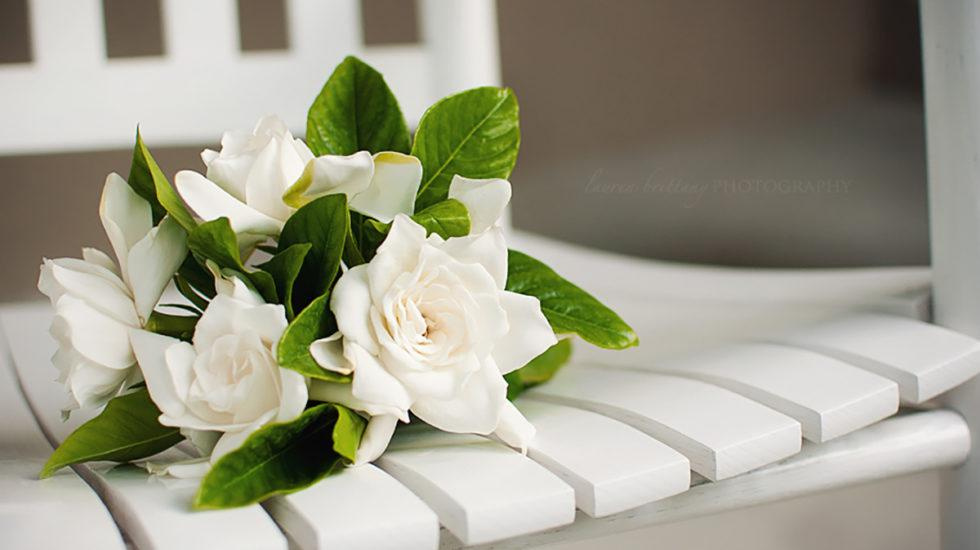
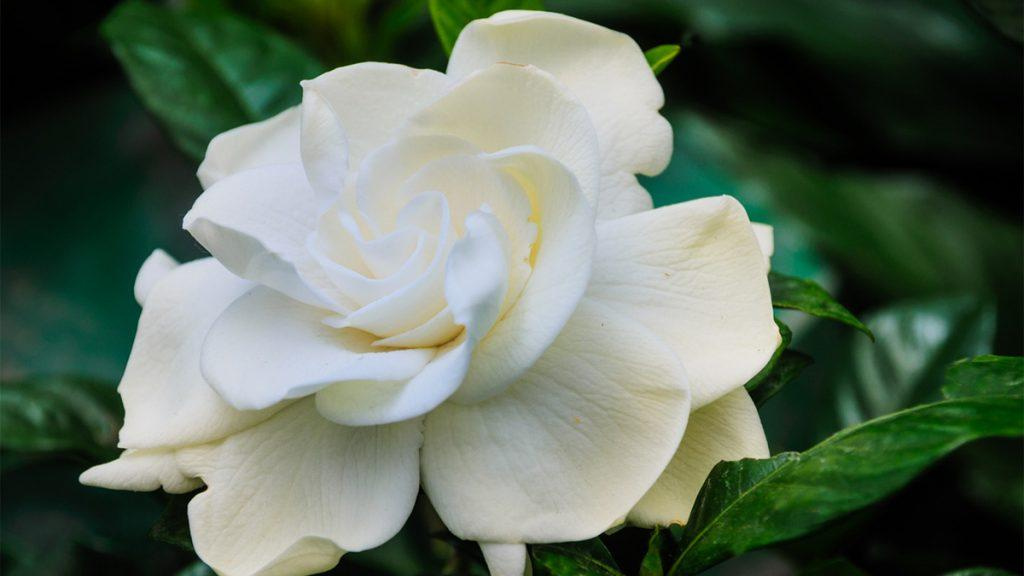

| Description | This superior grafted selection out-performs others due to rootstock that gives it the ability to thrive in poor soils and easily take up soil nutrients while having excellent resistance to nematodes. A prolific bloomer with large, double, sweetly fragrant, velvety white flowers. A superb evergreen accent, low hedge or container plant. |
|---|---|
| Bloom Time | Spring through fall |
| Deciduous/Evergreen | Evergreen |
| Special Features | Easy Care, Improved Pest and Disease Resistance, Attracts Pollinators |
| Problems/Solutions | Deer Resistant |
| Growth Rate | Moderate |
| Growth Habit | Rounded |
| Flower Attributes | Flowers for Cutting, Fragrant, Long Bloom Season, Showy Flowers |
| Landscape Use | Border, Container, Hedge, Privacy Screen, Suitable for Topiary |
| Design Ideas | The perfect plant for filling blank walls of foundation planting adjacent to doors and windows that let the fragrance in. Enjoy same as a sideyard filler. Large enough to be an informal hedge or screen at outdoor living areas, porch or patio and even around a spa. Exceptional background plant for Asian inspired garden design. Works just as well in tropical garden often wanting for flowers. Been singled out by modern garden designers for courtyard effects. |
| Flower Color | White |
| Foliage Color | Dark Green |
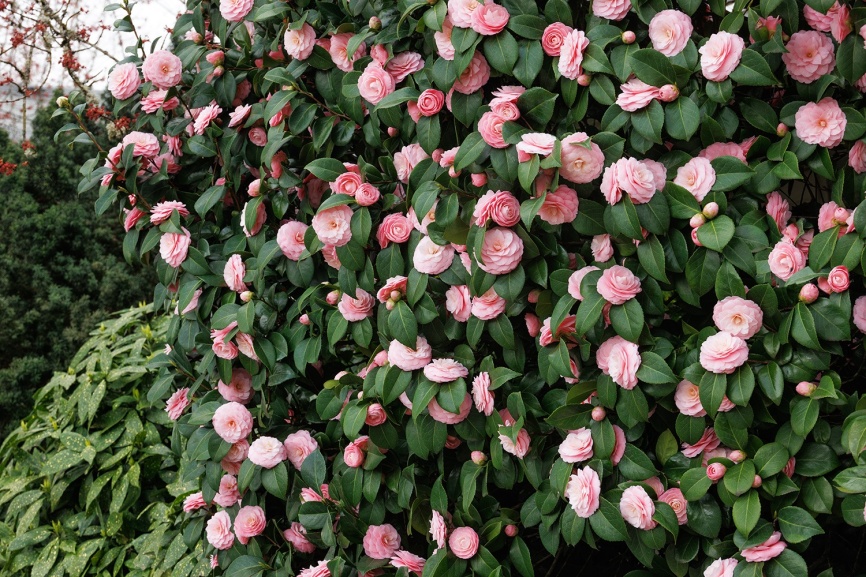
| Companion Plants | Fuchsia (Fuchsia); Azalea (Azalea); Daphne (Daphne); Camellia (Camellia); Agapanthus (Agapanthus) |
| Care Instructions | Thrives in organically rich, slightly acidic, well-drained soils. Handle with care when transplanting; gardenia roots are best undisturbed. Water deeply and regularly during the first growing season to establish an extensive root system. Feed with an acid fertilizer after bloom. Keep roots cool with a thick layer of mulch. |
| History | Gardenia is a native of China where it has been cultivated for over a thousand years. Plants reached America directly from Asia in 1761. John Ellis cultivated them first at his South Carolina plantation. These would be the progenitor for all gardenias in England. Ellis named the genus for his friend, Dr. Alexander Garden, a physician of Charleston. Its chief propose for early cultivation was for the cut flower industry as a heavy fragrance corsage. Gardenia varieties are improved when grafted onto Gardenia thunbergii rootstock due to its superior root system and its resistance to Root-knot Nematodes, a key benefit to the southeastern part of the United States. The vigorous rootstock is more efficient at absorbing soil nutrients. |
Details
| Description | This superior grafted selection out-performs others due to rootstock that gives it the ability to thrive in poor soils and easily take up soil nutrients while having excellent resistance to nematodes. A prolific bloomer with large, double, sweetly fragrant, velvety white flowers. A superb evergreen accent, low hedge or container plant. |
|---|---|
| Bloom Time | Spring through fall |
| Deciduous/Evergreen | Evergreen |
| Special Features | Easy Care, Improved Pest and Disease Resistance, Attracts Pollinators |
| Problems/Solutions | Deer Resistant |
| Growth Rate | Moderate |
| Growth Habit | Rounded |
| Flower Attributes | Flowers for Cutting, Fragrant, Long Bloom Season, Showy Flowers |
Style
| Landscape Use | Border, Container, Hedge, Privacy Screen, Suitable for Topiary |
|---|---|
| Design Ideas | The perfect plant for filling blank walls of foundation planting adjacent to doors and windows that let the fragrance in. Enjoy same as a sideyard filler. Large enough to be an informal hedge or screen at outdoor living areas, porch or patio and even around a spa. Exceptional background plant for Asian inspired garden design. Works just as well in tropical garden often wanting for flowers. Been singled out by modern garden designers for courtyard effects. |
| Flower Color | White |
| Foliage Color | Dark Green |
| Companion Plants | Fuchsia (Fuchsia); Azalea (Azalea); Daphne (Daphne); Camellia (Camellia); Agapanthus (Agapanthus) |
Care
| Care Instructions | Thrives in organically rich, slightly acidic, well-drained soils. Handle with care when transplanting; gardenia roots are best undisturbed. Water deeply and regularly during the first growing season to establish an extensive root system. Feed with an acid fertilizer after bloom. Keep roots cool with a thick layer of mulch. |
|---|
History
| History | Gardenia is a native of China where it has been cultivated for over a thousand years. Plants reached America directly from Asia in 1761. John Ellis cultivated them first at his South Carolina plantation. These would be the progenitor for all gardenias in England. Ellis named the genus for his friend, Dr. Alexander Garden, a physician of Charleston. Its chief propose for early cultivation was for the cut flower industry as a heavy fragrance corsage. Gardenia varieties are improved when grafted onto Gardenia thunbergii rootstock due to its superior root system and its resistance to Root-knot Nematodes, a key benefit to the southeastern part of the United States. The vigorous rootstock is more efficient at absorbing soil nutrients. |
|---|
Retailers Near You
About Us
We have been pioneers and craftsmen in the art of growing plants for 100 years. Since our founding in Southern California by Harry E. Rosedale, Sr. in 1926, we have been absolutely dedicated and obsessed with quality.
We have been pioneers and craftsmen in the art of growing plants for nearly 100 years. Since our founding in Southern California by Harry E. Rosedale, Sr. in 1926, we have been absolutely dedicated and obsessed with quality.