
You're growing in this Zip Code:
Change LocationDiscover Plants for Your Area
Azure Bush Germander
Teucrium fruticans 'Azureum'
Pronunciation: TEW-kri-um fru-ti-CANS
SKU #07274
LIGHT:
Full sun
WATER:
Once established, water occasionally.
SIZE:
Fast growing shrub; reaches 4 to 6 ft. tall and wide.

Retailers Near You
Ready to Grow?
Ship Monrovia plants directly to your door. Browse a curated selection available online.
Shop Now >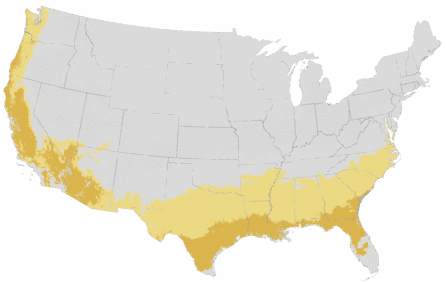
| Description | This tough performer has aromatic gray-green leaves with silvery white undersides that shimmer in the sunlight. Flowers are a darker blue than other varieties. Tolerates poor, rocky soils. An attractive, waterwise solution for fast-draining, unimproved slopes, and minimal care gardens. A nice container accent. Evergreen. |
|---|---|
| Bloom Time | Spring through fall |
| Deciduous/Evergreen | Evergreen |
| Special Features | Easy Care, Improved Pest and Disease Resistance, Waterwise, Attracts Pollinators, Fast Growing |
| Problems/Solutions | Coastal Exposure, Deer Resistant, Erosion Control, Drought Tolerant, Tolerates Urban Pollution |
| Growth Rate | Fast |
| Growth Habit | Mounding |
| Flower Attributes | Flowers for Cutting, Showy Flowers |
| Landscape Use | Border, Container, Hedge, Hillside |
| Design Ideas | The blue flowers of this germander are much sought after in gardens. Use this shrub in the border as an accent with other blues or contrast it with bright colored shrubs and perennials. A good choice for poor soils. |
| Flower Color | Blue |
| Foliage Color | Gray-green |
| Companion Plants | Loropetalum (Loropetalum); Lavender Cotton (Santolina); Black-Eyed Susan (Rudbeckia); Coneflower (Echinacea); Tickseed (Coreopsis) |
| Care Instructions | Provide average, neutral to slightly alkaline, loose, well-drained soil; avoid heavy clay with poor drainage. Water deeply, regularly in first growing season to establish root system. Once established, reduce frequency; tolerates drought. Fertilize in early spring. Does not require pruning, but tolerates shearing well. |
| History | A member of the mint family of Western Mediterranean origin. In cultivated gardens for over 300 years, it was introduced into Britain in the 18th century but proved of too limited hardiness and became a vital plant of Craftsman-era Los Angeles. |
| Lore | Teucrium was named for Teucer, the legendary first king of Troy who pioneered use of these plants as medicinals. |
Details
| Description | This tough performer has aromatic gray-green leaves with silvery white undersides that shimmer in the sunlight. Flowers are a darker blue than other varieties. Tolerates poor, rocky soils. An attractive, waterwise solution for fast-draining, unimproved slopes, and minimal care gardens. A nice container accent. Evergreen. |
|---|---|
| Bloom Time | Spring through fall |
| Deciduous/Evergreen | Evergreen |
| Special Features | Easy Care, Improved Pest and Disease Resistance, Waterwise, Attracts Pollinators, Fast Growing |
| Problems/Solutions | Coastal Exposure, Deer Resistant, Erosion Control, Drought Tolerant, Tolerates Urban Pollution |
| Growth Rate | Fast |
| Growth Habit | Mounding |
| Flower Attributes | Flowers for Cutting, Showy Flowers |
Style
| Landscape Use | Border, Container, Hedge, Hillside |
|---|---|
| Design Ideas | The blue flowers of this germander are much sought after in gardens. Use this shrub in the border as an accent with other blues or contrast it with bright colored shrubs and perennials. A good choice for poor soils. |
| Flower Color | Blue |
| Foliage Color | Gray-green |
| Companion Plants | Loropetalum (Loropetalum); Lavender Cotton (Santolina); Black-Eyed Susan (Rudbeckia); Coneflower (Echinacea); Tickseed (Coreopsis) |
Care
| Care Instructions | Provide average, neutral to slightly alkaline, loose, well-drained soil; avoid heavy clay with poor drainage. Water deeply, regularly in first growing season to establish root system. Once established, reduce frequency; tolerates drought. Fertilize in early spring. Does not require pruning, but tolerates shearing well. |
|---|
History
| History | A member of the mint family of Western Mediterranean origin. In cultivated gardens for over 300 years, it was introduced into Britain in the 18th century but proved of too limited hardiness and became a vital plant of Craftsman-era Los Angeles. |
|---|---|
| Lore | Teucrium was named for Teucer, the legendary first king of Troy who pioneered use of these plants as medicinals. |
Frequently asked questions
Does Azure Bush Germander produce flowers?
Spring through fall
Is Azure Bush Germander evergreen or deciduous?
Azure Bush Germander is Evergreen.
What are the special features of Azure Bush Germander?
Azure Bush Germander is Easy Care, Improved Pest and Disease Resistance, Waterwise, Attracts Pollinators, Fast Growing.
Is Azure Bush Germander resistant to pests or animals?
Coastal Exposure, Deer Resistant, Erosion Control, Drought Tolerant, Tolerates Urban Pollution
How fast does Azure Bush Germander grow?
Azure Bush Germander has a Fast growth rate.
What is the growth habit of Azure Bush Germander?
Azure Bush Germander grows in an Mounding habit.
Where can I use Azure Bush Germander in my landscape?
Azure Bush Germander is suitable for: Border, Container, Hedge, Hillside.
How can I use Azure Bush Germander in my garden design?
The blue flowers of this germander are much sought after in gardens. Use this shrub in the border as an accent with other blues or contrast it with bright colored shrubs and perennials. A good choice for poor soils.
What color are Azure Bush Germander flowers?
Azure Bush Germander produces Blue flowers.
What color is the foliage of Azure Bush Germander?
Azure Bush Germander has Gray-green foliage.
What plants grow well with Azure Bush Germander?
Good companion plants for Azure Bush Germander include: Loropetalum (Loropetalum); Lavender Cotton (Santolina); Black-Eyed Susan (Rudbeckia); Coneflower (Echinacea); Tickseed (Coreopsis).
How do I care for Azure Bush Germander?
Provide average, neutral to slightly alkaline, loose, well-drained soil; avoid heavy clay with poor drainage. Water deeply, regularly in first growing season to establish root system. Once established, reduce frequency; tolerates drought. Fertilize in early spring. Does not require pruning, but tolerates shearing well.
What is the history of Azure Bush Germander?
A member of the mint family of Western Mediterranean origin. In cultivated gardens for over 300 years, it was introduced into Britain in the 18th century but proved of too limited hardiness and became a vital plant of Craftsman-era Los Angeles.
Retailers Near You
About Us
We have been pioneers and craftsmen in the art of growing plants for 100 years. Since our founding in Southern California by Harry E. Rosedale, Sr. in 1926, we have been absolutely dedicated and obsessed with quality.
We have been pioneers and craftsmen in the art of growing plants for nearly 100 years. Since our founding in Southern California by Harry E. Rosedale, Sr. in 1926, we have been absolutely dedicated and obsessed with quality.