
Growing the right plant in the right place is the first step to enjoying a more beautiful garden or landscape. When sited in a spot where it is happy, virtually every plant will be more carefree. More so than in a spot where it does not favor the growing conditions. This is especially true for Hydrangeas. With a wealth of beautiful Hydrangea types and varieties available, we help you select the right one for your garden.
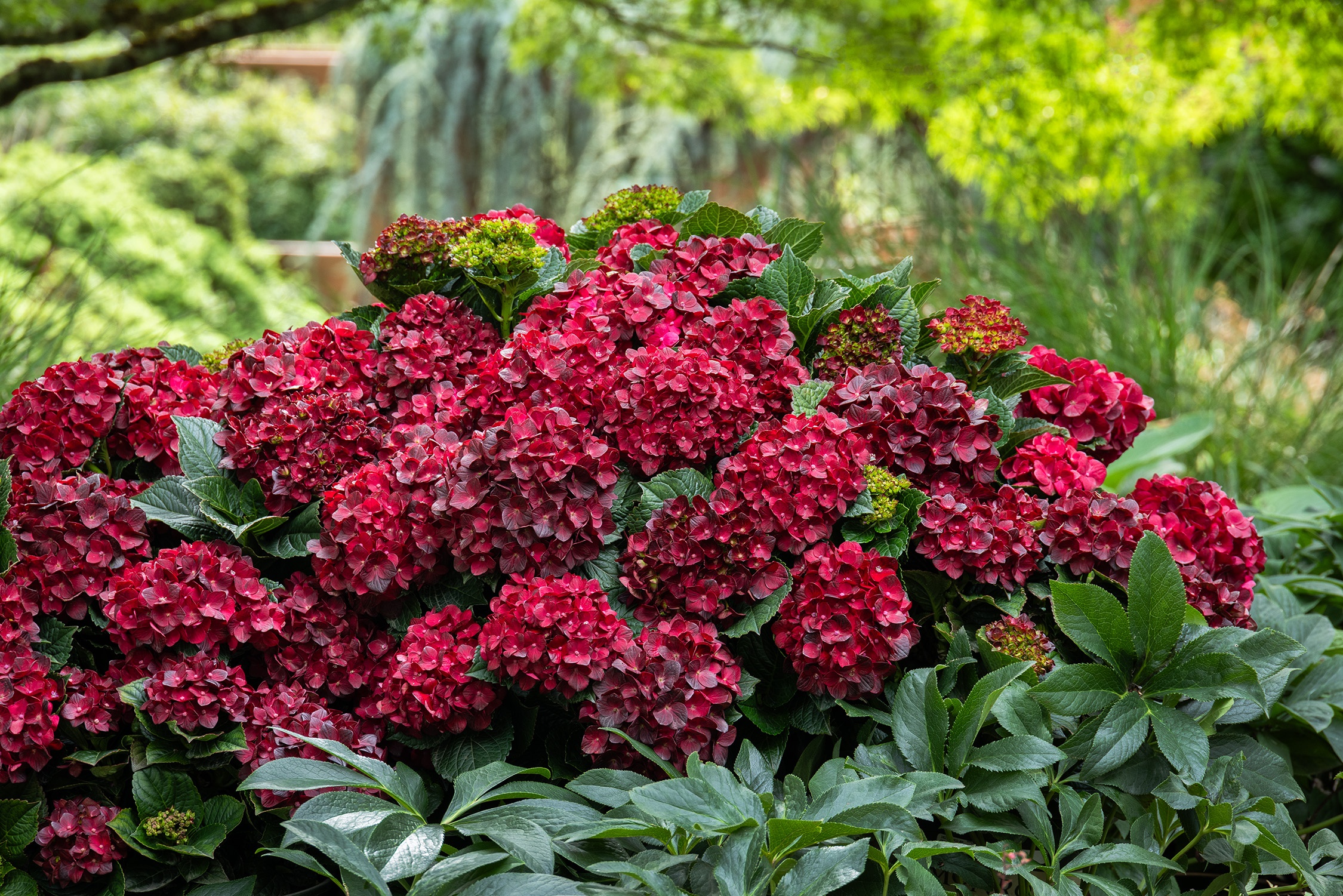
(Above) Monrovia celebrates 100 years of growing beautifully with the Centennial Ruby™ Hydrangea.
You Want a Hydrangea for Sun
Hydrangea paniculata varieties prefer all-day sun in most areas. They enjoy some afternoon shade in intensely hot-summer areas. Most bloom in mid-to-late summer and continue into early autumn. All have white flowers, though the blossoms on many newer varieties pick up pink tones as they age. If left on the plant in winter, the flower heads fade to a parchment color, adding seasonal interest.
Note: Hydrangea paniculata varieties are among the hardiest of all hydrangeas. This makes them excellent choices for gardeners in the Northern regions.
Hydrangea paniculata varieties
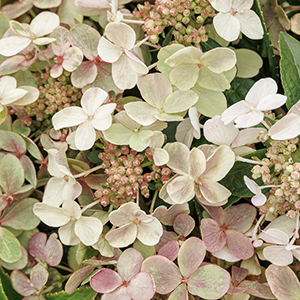
Early Evolution®
Hydrangea
Exceptionally small, this compact variety blooms earlier with a unique flower form. The blooms completely blanket the plant all season. Up to 2' tall and wide. Zones 4-9.
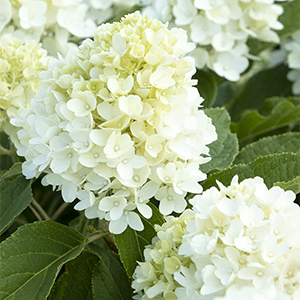
Candy Apple™
Hydrangea
Huge clusters of beautiful, creamy-green flowers that age to a pure white. A smaller version of the popular Limelight Hydrangea. Extra-sturdy stems do not flop. Up to 5' tall and wide. Zones 4-8.
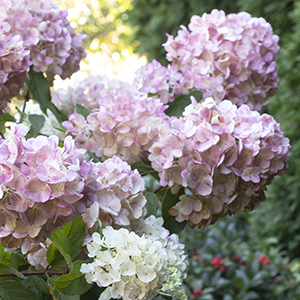
Strawberry Shake™
Hydrangea
A gorgeous panicle hydrangea in a compact form. This summertime showstopper has flower clusters that open white and quickly mature to a soft, rosy pink. Up to 5' tall, 4' wide. Zones 4-8.
You Want a Hydrangea Type for Shade
Many gardeners consider Bigleaf Hydrangea (Hydrangea macrophylla) the classic type. These hybrids offer globe-shaped flower heads in shades of blue, purple, pink, and white. In most areas, Bigleaf Hydrangeas thrive in part or filtered shade, especially in the hot hours of the day. Reblooming varieties continue to produce beautiful flowers on and off all summer and into autumn. On current stems and those from the previous year. Varieties that do not rebloom make their flower buds in late summer. They bloom in late spring or early summer of the next year.
Compact Hydrangea Types
The Seaside Serenade® collection is a line of beautiful, reblooming hydrangeas bred to stay small. They are perfect for garden beds and borders, as well as containers. They feature thick stems, leaves, and flowers. This keeps them standing straight even in rainy and windy weather. It prevents them from looking wilted in hot, windy conditions. It also makes them long-lasting cut flowers.
Seaside Serenade® Hydrangea varieties look as beautiful in the landscape as they do when cut for bouquets. Because the large petal-like bracts are extra-thick, individual flower heads can last three months or more on the plant. Most Seaside Serenade® varieties go through a shift in colors as the flowers age, maturing to an antique, parchment-like shade.
The thickness of the bracts also makes these varieties good for drying. The process is simple: Cut the flowers and hang them upside down in a warm, dry place for several weeks.
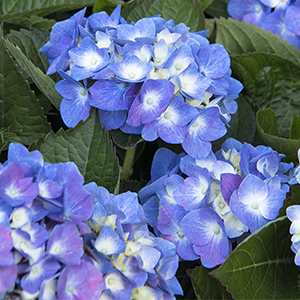
Seaside Serenade® Cape Cod Hydrangea
Ideal for adding a burst of color to partly shaded gardens, it reblooms all season with big, globe-shaped flowers. The blossoms range from blue to pink depending on soil pH. 4' tall and wide. Zones 4-9.
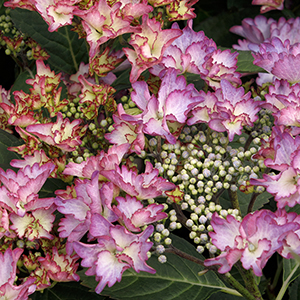
Seaside Serenade® Crystal Cove
Hydrangea
Frilly lacecap blooms are edged with deep purple-blue when grown in acidic soils, deep pink when grown in neutral or alkaline soils. The colors become more delicate as they age through the summer. Up to 4' tall and wide. Zones 4-9.
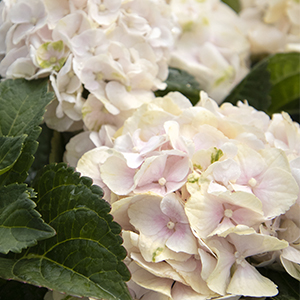
Seaside Serenade® Cape Lookout Hydrangea
An elegantly beautiful variety, its globe-shaped flowerheads emerge soft green, open white, then blush pink as they age. In autumn, its foliage picks up festive bronze coloration. 3½' tall and 3' wide. Zones 4-9.
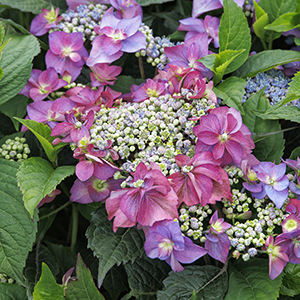
Seaside Serenade® Cape May Hydrangea
Bearing double blue, purple, or pink lacecap flowers (depending on soil pH), it reblooms from spring to autumn. This Hydrangea serrata variety is less likely to suffer stem dieback in cold climates. 3½' tall and 3' wide. Zones 4-9.
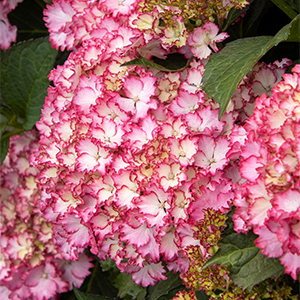
Seaside Serenade® Fire Island Hydrangea
An exceptionally beautiful bicolor variety, its white flowers are dramatically edged in a rich, rosy-red color. Its deep-green foliage emerges burgundy in spring and turns maroon in autumn, adding to the show. 3½'tall and 3' wide. Zones 4-9.
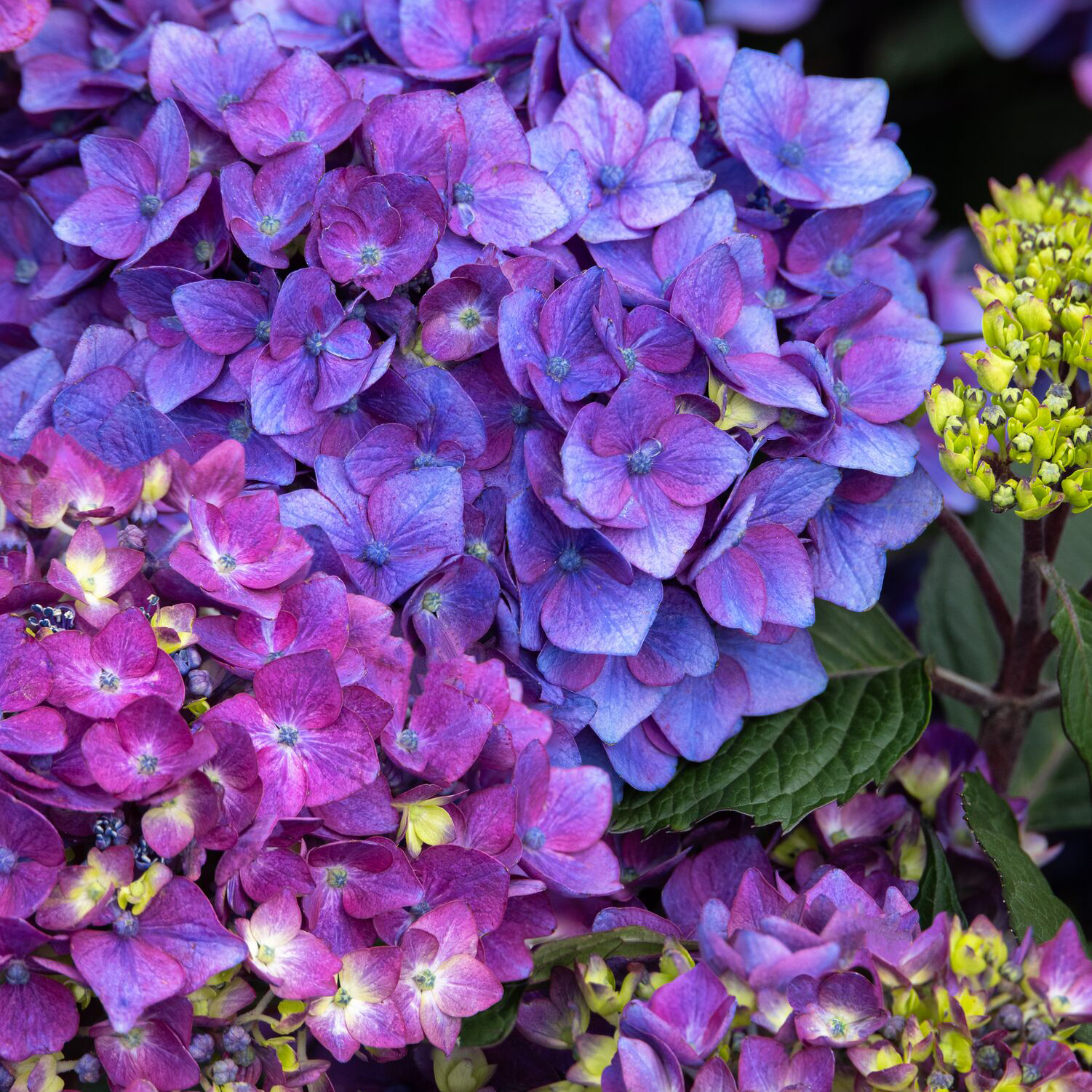
Seaside Serenade® Pebble Beach
Hydrangea
This selection features large raspberry blooms in alkaline soil or electric purple in acidic soils, with additional interest provided by dark red stems. 3 to 4 ft. tall and wide. Zones 4-9.
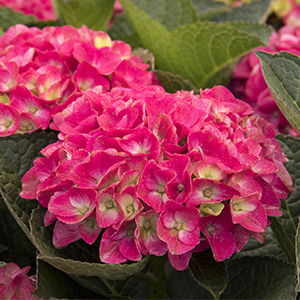
Seaside Serenade® Martha's Vineyard Hydrangea
Long-lasting, big clusters of bright pink blooms (even in acidic soils) on sturdy stems make sumptuous cut flowers. Plus it reblooms throughout summer and autumn. 3½' tall and 3' wide. Zones 4-9.
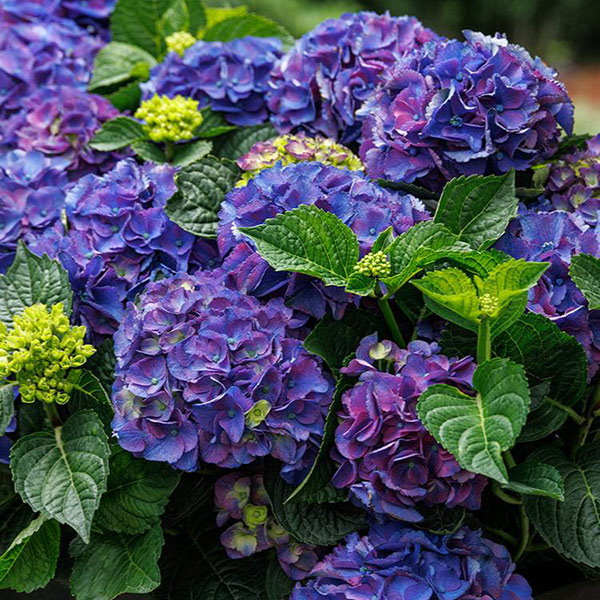
Seaside Serenade® Newport Hydrangea
An outstanding cut flower, its big flower clusters range from blue-violet to deep pink, depending on soil pH. Like other varieties in the collection, it reblooms all summer and into the autumn. 4' tall and wide. Zones 4-9.
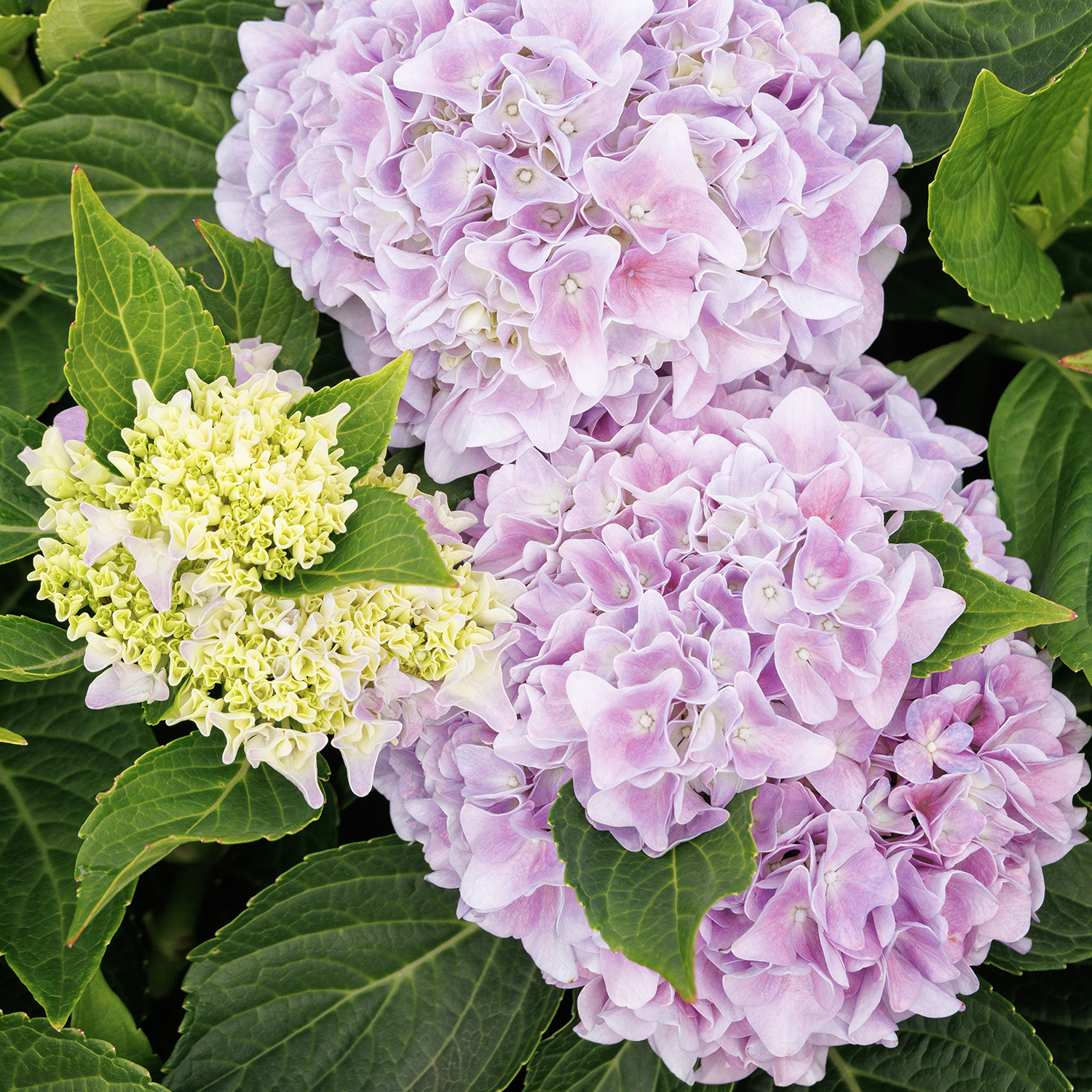
Seaside Serenade® Kitty Hawk
Hydrangea
Mophead clusters of star-shaped flowers start light green before blushing to pink in alkaline soils, or purple to blue in acidic soils. 4' tall and wide. Zones 4-9.
Companion plants for compact hydrangeas like Seaside Serenade®
Seaside Serenade® Hydrangea varieties pair beautifully with other classic shade-garden plants.
- Extend the season by pairing them with early-spring-blooming shrubs and perennials such as:
Bleeding Heart (Dicentra), Camellia, Columbine (Aquilegia), Blue Corydalis, Hellebore (Helleborus), and Lungwort (Pulmonaria). - Contrast their mounding form with upright plants such as:
Astilbe, Foxglove (Digitalis), Snakeroot (Actaea), or Variegated Acanthus (Acanthus ‘Whitewater’). - Complement these Hydrangeas with plants that have attractive foliage for spring-to-fall beauty. Some of our favorites include:
Camouflage® Japanese Aralia (Fatsia), Coral Bells (Heuchera), Hosta, and Japanese Forest Grass (Hakonechloa macra ‘All Gold’). - Add year-round structure to your shade garden by pairing Seaside Serenade® Hydrangeas with shade-tolerant evergreens such as:
Hemlock (Tsuga), Liriope, Pieris, Rhododendron, and Sweet Box (Sarcococca).
Hydrangea varieties that grow larger than 4 feet tall
If you have space for larger varieties of Bigleaf Hydrangeas, use them to add drama to the back border. Alternatively, use them in beautiful mass plantings, or as focal points.
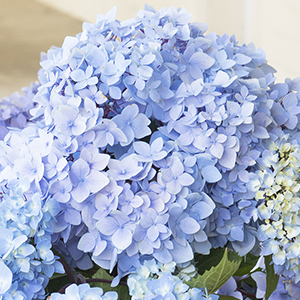
Blue Enchantress®
Hydrangea
A rebloomer with blue or pink flowers depending on soil pH. Striking dark-red stems add even more garden interest. Flowers age to a vintage cream-splashed green. 5' tall and wide. Zones 4-9.
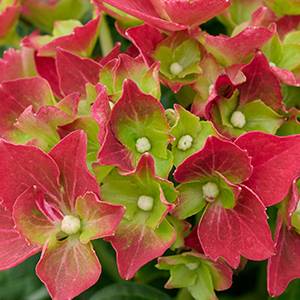
Hi™ Fire
Hydrangea
Incredible, deeply saturated blooms are red in alkaline soil and purple with a bright blue eye in acidic soil. Exceptionally strong stems make for a sturdy plant. 4' to 6' tall and wide. Zones 5-9
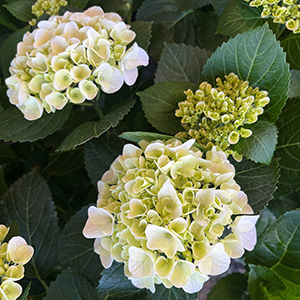
Hi™ White Sun
Hydrangea
A reblooming, mop-head hydrangea with big, crisp white flower heads. Exceptionally strong stems make for a sturdy plant. Perfect for creating a classic cottage look. Up to 5' tall, 6' wide. Zones 5-9.
Unique or Rare Hydrangea Varieties
Get a different look than the traditional blue, pink, or white mopheads with one (or more!) of these distinctive and truly unique hydrangea types.
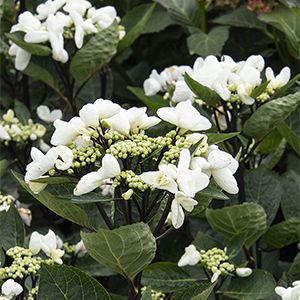
Seaside Serenade® Glacier Bay Hydrangea
Brilliant white lacecap blooms spark against the dark black stems. Reblooms all summer and into fall. This compact variety is perfect for massing in landscape or use in containers. 3' tall and wide. Zones 4-9.
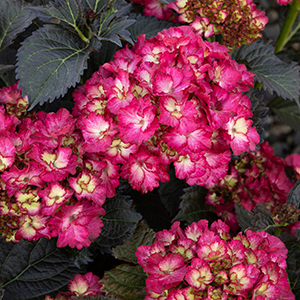
Seaside Serenade® Hanalei Bay
Hydrangea
Moody and bright, forming a dense, rounded shrub with fantastically dark foliage backing big mopheads of deep magenta, slightly frilled flowers with light green to white centers. 3' tall and wide. Zones 5-9.
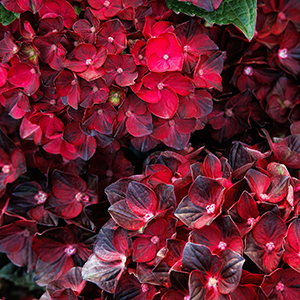
Centennial Ruby™
Hydrangea
A special release to celebrate Monrovia's 100th anniversary, the flowers of this hydrangea are simply stunning. The rich ruby-red mophead blooms deepen in color as the long-lasting flowers age, taking on almost black hues. 3' tall and wide. Zones 4-9.
Hydrangea Types Native to North America
Two common types of hydrangea, Oakleaf (H. quercifolia) and Smooth (H. arborescens) are native to areas of Eastern North America. Both types prefer shaded or partially shaded sites and feature clusters of pure white flowers. Smooth Hydrangea varieties bear round flower clusters. Oakleaf Hydrangea varieties bear cone-shaped clusters.
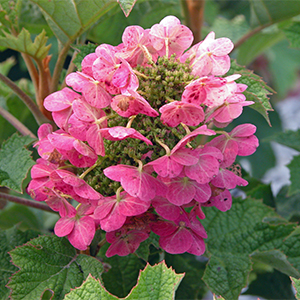
Ruby Slippers
Oakleaf Hydrangea
Its large bloom clusters open pure white, but then quickly age to deep pink, adding beauty to the shaded garden. Its leaves add fall interest when they transform to lush shades of mahogany and purple. 3½' tall and 5' wide. Zones 5-9.
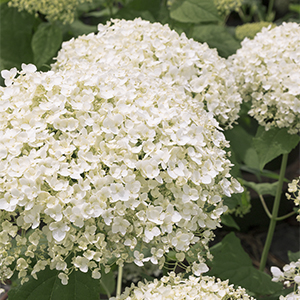
Seaside Serenade® Bar Harbor Hydrangea
More compact than the Annabelle variety, but with larger flowers. Like other Seaside Serenade® varieties, its stems stay standing straight. It blooms throughout the summer. 4' tall and wide. Zones 3-8.
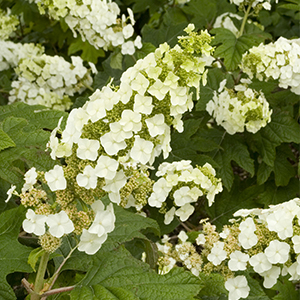
Snow Queen
Oakleaf Hydrangea
Loved for its extra-large, dense, white flowers that develop a rosy hue in fall. Fabulous fall color continues when the leaves turn reddish-bronze. 5' tall and 6' wide. Zones 5-9.
You Want a Climbing Hydrangea
One species of Hydrangea (H. anomala) breaks the mold. Rather than being a self-supporting shrub, it climbs walls, fences, and other structures. Climbing Hydrangea appreciates a shaded or partly shaded spot and blooms in summer with lacecap-style flowers. While it grows quickly once established, it may take several years to get settled in the landscape. (Sometimes testing a gardener's patience.)
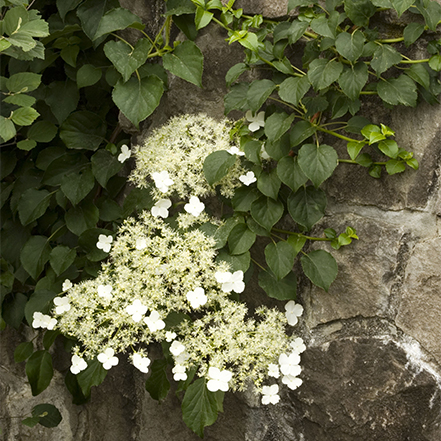
Climbing Hydrangea
A vigorous and showy vine that can climb to 50' or more, clinging to surfaces with aerial rootlets. Slowly grows with a shrubby habit until established, and then takes off with long, fast-growing stems. Lush foliage is covered with magnificent, white lacecap blooms in summer. Stems can reach 50-80' long. Zones 5-9.
Bonus: Hydrangea-like Plants
Schizophragma varieties are often called Chinese Hydrangea or False Hydrangea. They are closely related to Climbing Hydrangea and sometimes confused with it. These plants bear white lacecap-style flowers. Like Climbing Hydrangea, Schizophragma climb by rooting into the structure on which they grow.
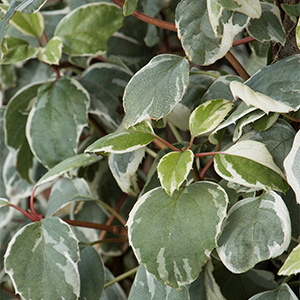
Lacy Hearts™ Chinese Hydrangea Vine
A rare variety, with blue-green leaves, delicately edged in creamy white that contrasts its reddish stems. Climbs to 15'. Zones 6-9.
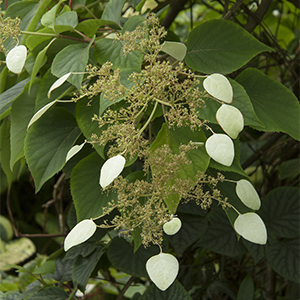
Moonlight Chinese
Hydrangea Vine
A standout selection, with blue-green leaves that have a silvery sheen and fragrant flowers in summer. Climbs to 15'. Zones 6-9.
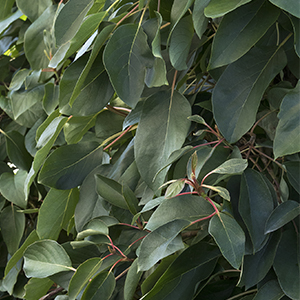
Red Rhapsody® False
Hydrangea Vine
New growth emerges in spring with a red blush before maturing to a rich green color. In summer it bears large flower clusters. It climbs to 15'. Zones 6-9.
More Information about Growing Hydrangeas
How to Use Hydrangeas in Your Garden DesignReady to Grow?
Ship Monrovia plants directly to your door. Browse a curated selection available online.
Shop Now >