
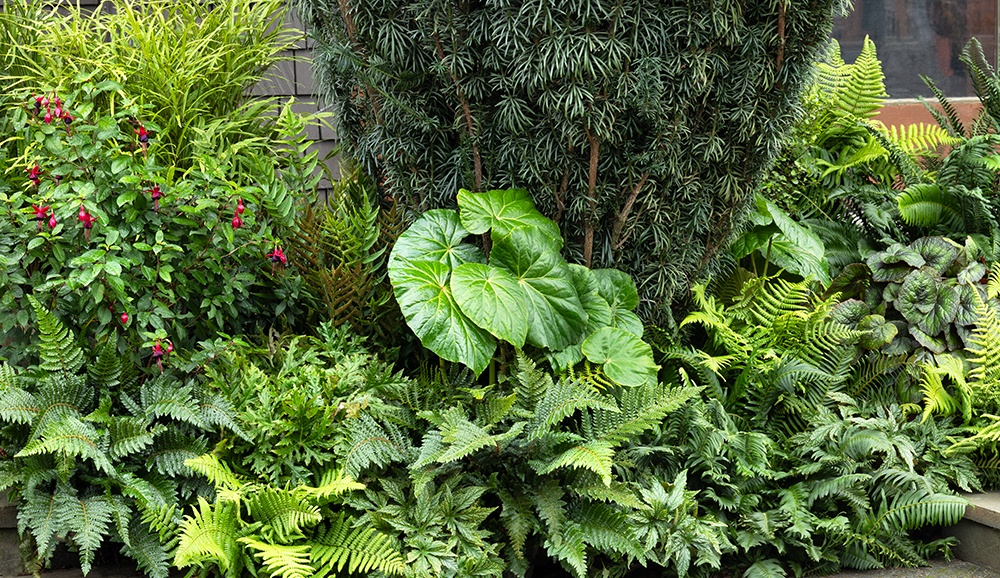
For decades, Dan Hinkley has searched the world for plants that deserve a place in our gardens. From the bogs of northern Michigan to the mountains of Nepal and the forests of northeastern India, his journeys have introduced North American gardeners to plants of remarkable beauty, toughness, and character. Dan brought some of his exclusive finds to Monrovia, creating our Dan Hinkley Plant Collection.
Above: Selections from the Jurassic™ Fern and Tectonic® Begonia collections.
As Monrovia celebrates 100 years of growing, we sat down with Dan to reflect on a lifetime of plant hunting, what makes a plant truly timeless, and why he believes the best gardens are built slowly—one thoughtful decision at a time.
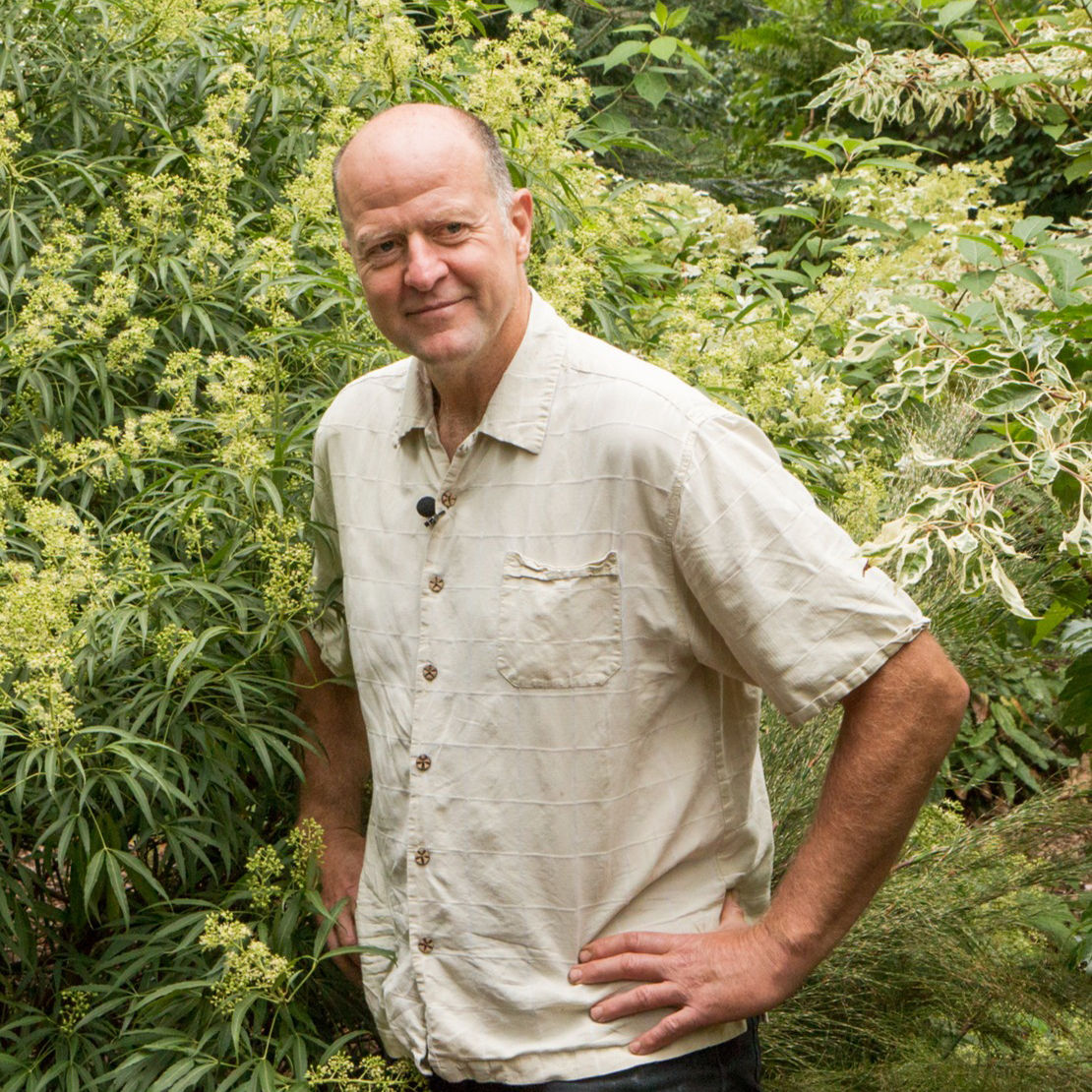
“I was that weird, nerdy kid.”
Q: You’ve spent decades searching the world for great plants. What first drew you to plant hunting?
Dan: You know, as a kid, I was really into plants. I was that weird, nerdy kid. I started exploring the bogs of northern Michigan because they had such a finite number of plants in that ecosystem.
I began reading about bogs and about the individual plants in them.
It became my quest to get onto those floating sphagnum surfaces—you know, it’s like walking on a waterbed—and to find those plants. Finding my first sundew was thrilling.
As I got into high school and college, I started reading about isolated populations of rare trees around Michigan and would go looking for them on weekends. When I would find one, it was exhilarating. That just carried on through college and beyond.
I began organizing trips much further afield and learned the process by hard knocks. It was learning by doing. I still get emails from people asking how to do what I do, and I say, “Just do it.” That’s the only way you’re going to learn—by getting out in the field and making mistakes.
Serendipity on a mountain road
Q: You’ve met many fellow plant explorers along the way. How important were those connections?
Dan: I was fortunate enough to intersect with other plant people who wanted to do the same thing. A lot of it was pure serendipity.
In 1993, in Korea, an English couple stopped on a mountain road where I was collecting seed and asked me for directions—as if I knew where I was. That encounter led to a 30-year friendship and many adventures together. We learned from each other, and that kind of exchange has been repeated many times over my life.
Nepal: A turning point
Q: Were there landscapes that fundamentally changed how you think about plants and gardens?
Dan: Thinking about plants and thinking about gardens are different.
Japan was instrumental in developing my sense of aesthetic and the preciousness of horticulture.
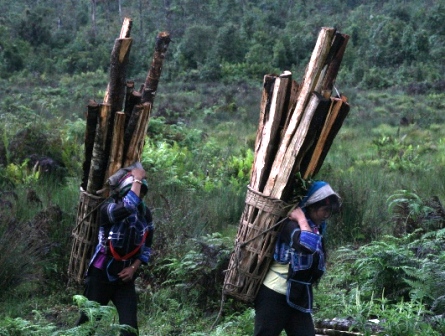
But plants themselves—my first trek into Nepal in 1995 changed me.
It was this incredible amalgamation of culture, people, and plants. I would spend all day on the trail looking at plants and dreaming of them in my garden. At the same time, Nepal is a society without a middle class and without gardening as we know it—people are surviving. Watching how they grew food and fiber crops changed me. It made me a better gardener.
What makes a plant timeless?
Q: Many of the plants you’ve introduced feel timeless. What qualities give a plant longevity in the garden?
Dan: First, it has to be accessible to a larger population of gardeners. That means it has to be easy to cultivate. We can fuss over rarities in our own gardens, but most people don’t have time for that. A plant's toughness makes it worthy.
Secondly, it’s about lasting traits—not flowers. Flowers are icing on the cake. They come and go. What matters are foliage, texture, stem color, evergreen presence—characteristics that carry the garden through the seasons. Those lasting traits make a plant timeless.
“Flowers are icing on the cake. What matters are the characteristics that last.”
The meaning of “Landscape Legend”
Q: When gardeners see a plant labeled ‘Legend,’ what do you hope that evokes?
Dan: I hope they understand that real gardeners—such as you, such as me, such as Monrovia—have grown these plants for a long time. They weren’t just found in a lab and rushed to market. They’ve been time-tested by real gardeners.
Remembering the first sight
Q: Is there a plant whose story particularly stands out to you?
Dan: If you went down the list of plants in the collection, I can flash to the moment I first saw each one. I can’t remember birthdays, but I can recall when I first saw a plant.
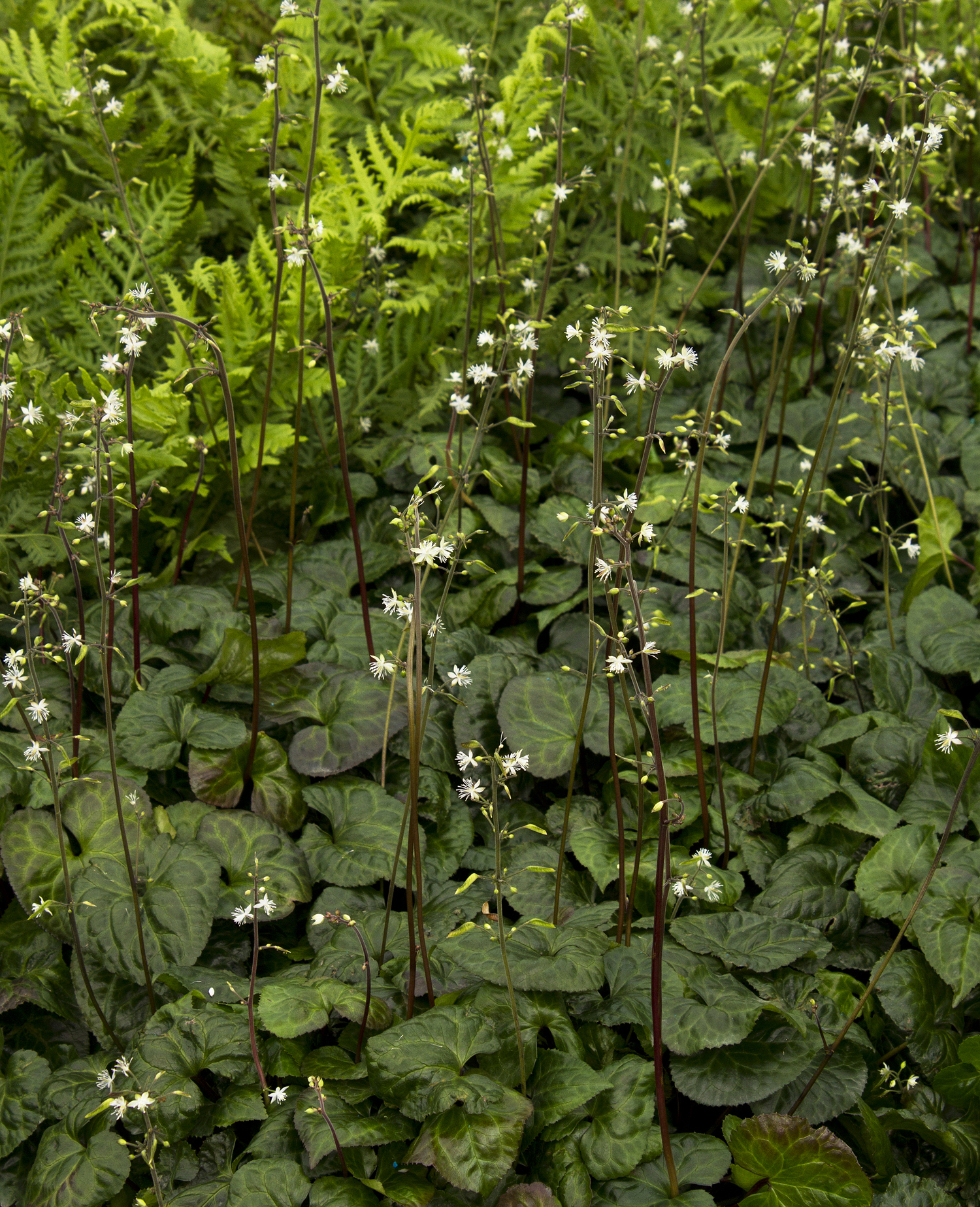
You’ve grown Beesia for some time. I found it coming down a mountainside on Mount Emei in Sichuan. I had no idea what it was, but I knew it had an amazing presence. I collected it and didn’t know its identity for two years until a colleague recognized it.
Now I’ve seen it growing in botanic gardens and across North America. I don’t point it out to people—I don’t want to be insufferable—but it tickles me deeply to see plants I’ve collected thriving in other people’s gardens.
I once named a geranium ‘Catherine Adele’ after my partner Robert’s mother. Seeing it offered on nursery racks in Japan after she passed away—that was deeply pleasing. Catherine was still traveling the world.
“It tickles me deeply when I see plants I’ve collected thriving in other people’s gardens.”
Gardening in a changing climate
Q: Has climate change affected how you think about selecting plants?
Dan: Absolutely. I think many of us initially thought climate change was someone else’s problem, something we’d face far in the future. But in the last ten years, I’ve become hyper-aware that we’re in it now.
I’m trying to garden more wisely—selecting for a Pacific Northwest climate that will be drier and hotter. That means collecting further south and in drier locales. I’m going to Crete soon. It sounds odd, but plants from hot, dry climates will serve an important purpose here.
The common thread
Q: What do the plants in your collection share in common?
Dan: I hate to use the word “aristocratic,” but there’s a uniqueness to them. They add something special to a garden—bold foliage, interesting fruit, fragrance, height where everything else is dwarfed.
I have to applaud Monrovia for taking chances on plants that aren’t cookie-cutter. These one-offs add something extraordinary.
“They provide a uniqueness to a garden that you’re not going to see everywhere else.”
Returning to old friends
Q: Are there plants you once loved, fell out of favor with, and now love again?
Dan: It’s the reverse for me. I’m in my seventies now, and I find myself returning to plants I loved in my twenties and dismissed later. Euphorbias. Persicaria ‘Firetail.’ Good old standbys that bloom all summer and support bees.
I’m rediscovering my old friends.
Late to ferns—and obsessed
Dan laughs when he admits he came late to ferns.
Dan: I was a dinosaur. But now I’m obsessed. There are so many good ones I want Monrovia to consider. They provide such incredible foliage.
I’m building fern tables—just like in the Victorian era. I don’t have much topography in my garden, so I create elevation. Ferns respond beautifully.
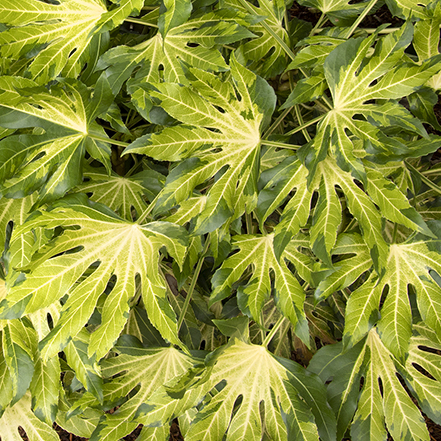
Why Fatsia ‘Camouflage’ works
Q: Why has Fatsia ‘Camouflage’ resonated so strongly?
Dan: It’s the boldness of leaf. If you’re unsatisfied with part of your garden, stick a bold foliage plant in, and it pulls the picture together.
There aren’t many hardy evergreen plants with foliage that large. Add the bizarre, wonderful coloration—and it works with so many things.
Looking ahead
Dan is preparing for two trips a year now—Crete, a return to New Zealand. Returning to places with wiser eyes excites him.
“I promise I won’t squander any time,” he says with a smile.
After a lifetime of searching mountainsides and bogs, Dan Hinkley is still looking closer—still learning, still rediscovering, still dreaming of plants on distant trails and in his own garden.
And for gardeners across North America, that spirit of curiosity may be his greatest legacy of all.
Stand-Outs from the Dan Hinkley Collection
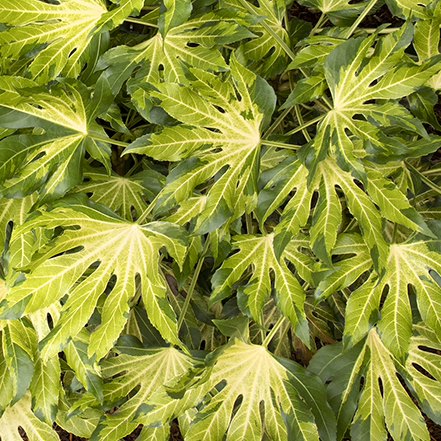
Camouflage® Variegated
Japanese Aralia
Brightly variegated leaves in yellow, lime, and green bring light to shaded gardens, followed by white flower panicles from fall into winter. Full shade to part sun. Up to 8' tall and wide. Zones 7-10.
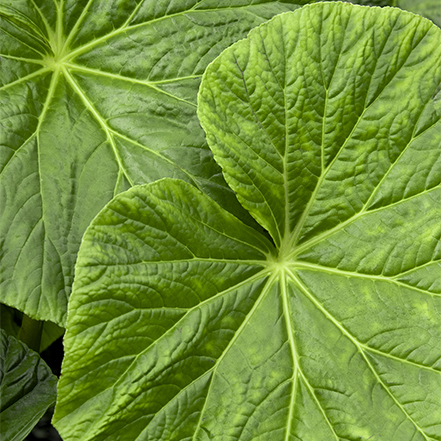
Tectonic® Caldera
Begonia
Massive, glossy, heart-shaped leaves emerge red and mature to bright green, forming a bold, architectural plant. Nodding white flowers and round seed pods develop beneath the foliage. Partial shade. Up to 6' tall and wide. Zones 8-11.
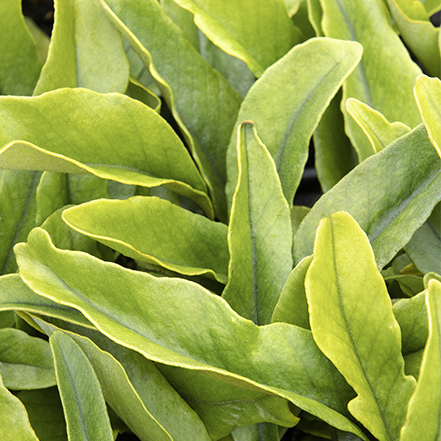
Jurassic™ Brontosaurus
Tongue Fern
Growing on rocks under extreme drought conditions, this curiously beautiful evergreen species was collected in Hunan Province by plantsman Dan Hinkley. Part shade to part sun. Up to 1' tall and wide, spreading over time. Zones 8-11.
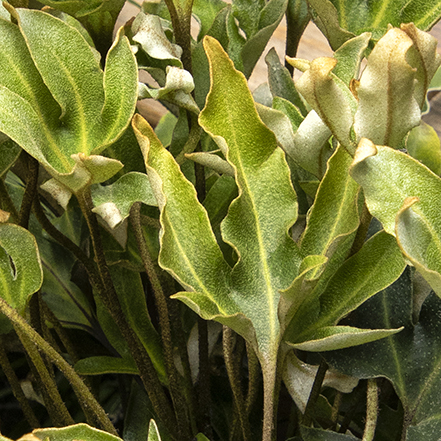
Jurassic™ Triceratops
Finger Fern
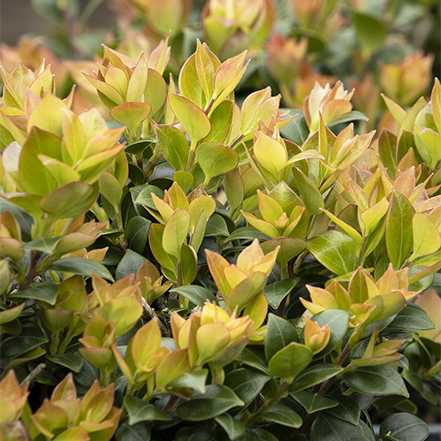
Collected by Dan Hinkley in Taiwan in 2012, this is an exceptional Pyrossias, forming substantial evergreen mounds of leathery palmate foliage. Part shade to full sun.Up to 2' tall, 3' wide. Zones 7-11.
Beesia
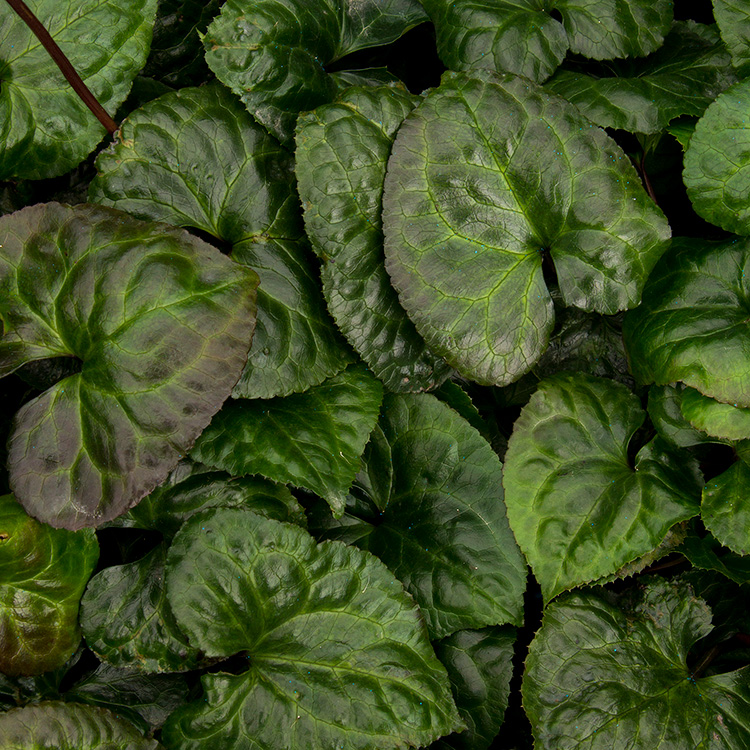
A gently-spreading evergreen groundcover with exceptionally shiny, green to gunmetal blue, heart-shaped leaves. The foliage creates a handsome backdrop for the pretty star-shaped spring flowers. Full to part shade. 12 to 18 in. tall, 18 to 24 in. wide. Zones 6-8.
Get More Garden Stories and Expert Insight
- Sign up for the Grow Beautifully Newsletter. You'll get gardening tips, design advice, free digital guides, and live webinar invites. Plus, new, exclusive plant information is delivered straight to your inbox twice a month.
- Get free landscape plans and design tips with our Digital Planning Guides.
- Shop the Dan Hinkley Collection
- See Dan's garden and learn about high-performance plants for shade
- 10 Global Dan Hinkley Plant Finds
Ready to Grow?
Ship Monrovia plants directly to your door. Browse a curated selection available online.
Shop Now >