
You're growing in this Zip Code:
Change LocationDiscover Plants for Your Area
Colorado Blue Spruce
Picea pungens 'Glauca'
Pronunciation: PY-see-a PUN-jenz
SKU #06466
LIGHT:
Full sun, Partial sun
WATER:
Water when top 2 inches of soil is dry.
SIZE:
Reaches 10-12 ft. tall in 10 years; 40-60 ft. tall, 10-20 ft. wide with age.

Retailers Near You
Ready to Grow?
Ship Monrovia plants directly to your door. Browse a curated selection available online.
Shop Now >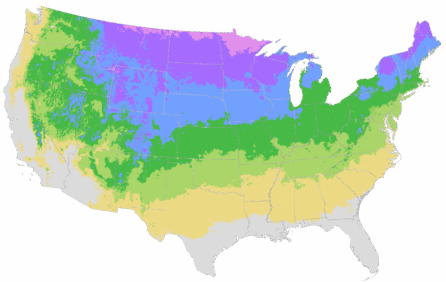

| Description | This very popular conifer has a handsome pyramidal form with rigid tiered branches densely covered with stiff gray-blue needles. Use as an evergreen windbreak or tall screen, or as a specimen plant in large landscapes. |
|---|---|
| Bloom Time | Conifer; prized for foliage. |
| Deciduous/Evergreen | Evergreen |
| Special Features | Dramatic Foliage Color, Easy Care, Benefits Birds |
| Problems/Solutions | Deer Resistant, Rabbit Resistant, Road Salt Tolerant |
| Growth Rate | Moderate |
| Growth Habit | Pyramidal |
| Landscape Use | Privacy Screen, Windbreak |
| Design Ideas | Twice taller than it is wide, this native forest evergreen is best used on large properties. Use it to separate tall multistory buildings or in shelterbelts and windbreaks. Tall enough to screen the view from second- or third-story windows. Gorgeous in estate-sized forests of broadleaf and conifers, where it stands out against deciduous trees and blankets of snow. |
| Foliage Color | Dark Green |
| Companion Plants | Spirea (Spiraea); Butterfly Bush (Buddleja); Weigela (Weigela); Blanket Flower (Gaillardia); Stonecrop (Sedum) |
| Care Instructions | Thrives in a wide range of soil types; prefers neutral to acidic soils. Follow a regular watering schedule during the first growing season to establish a deep, extensive root system. Watering can be reduced after establishment. Feed with a general purpose fertilizer before new growth begins in spring. |
| History | The species was first discovered in 1862 in the Rocky Mountains. Knap Hill nursery in Surrey, England were the first to raise the plant from cuttings in 1877. |
| Lore | A native tree from northern New Mexico through Colorado, Utah, and Wyoming and into Alberta and British Columbia. Picea pungens is the state tree of Colorado and Utah. The variety 'Glauca' is a Latin word that indicates a grayish-blue color and has been given to the silvery-blue forms of the species that are selected for the ornamental nursery trade. |
Details
| Description | This very popular conifer has a handsome pyramidal form with rigid tiered branches densely covered with stiff gray-blue needles. Use as an evergreen windbreak or tall screen, or as a specimen plant in large landscapes. |
|---|---|
| Bloom Time | Conifer; prized for foliage. |
| Deciduous/Evergreen | Evergreen |
| Special Features | Dramatic Foliage Color, Easy Care, Benefits Birds |
| Problems/Solutions | Deer Resistant, Rabbit Resistant, Road Salt Tolerant |
| Growth Rate | Moderate |
| Growth Habit | Pyramidal |
Style
| Landscape Use | Privacy Screen, Windbreak |
|---|---|
| Design Ideas | Twice taller than it is wide, this native forest evergreen is best used on large properties. Use it to separate tall multistory buildings or in shelterbelts and windbreaks. Tall enough to screen the view from second- or third-story windows. Gorgeous in estate-sized forests of broadleaf and conifers, where it stands out against deciduous trees and blankets of snow. |
| Foliage Color | Dark Green |
| Companion Plants | Spirea (Spiraea); Butterfly Bush (Buddleja); Weigela (Weigela); Blanket Flower (Gaillardia); Stonecrop (Sedum) |
Care
| Care Instructions | Thrives in a wide range of soil types; prefers neutral to acidic soils. Follow a regular watering schedule during the first growing season to establish a deep, extensive root system. Watering can be reduced after establishment. Feed with a general purpose fertilizer before new growth begins in spring. |
|---|
History
| History | The species was first discovered in 1862 in the Rocky Mountains. Knap Hill nursery in Surrey, England were the first to raise the plant from cuttings in 1877. |
|---|---|
| Lore | A native tree from northern New Mexico through Colorado, Utah, and Wyoming and into Alberta and British Columbia. Picea pungens is the state tree of Colorado and Utah. The variety 'Glauca' is a Latin word that indicates a grayish-blue color and has been given to the silvery-blue forms of the species that are selected for the ornamental nursery trade. |
Frequently asked questions
Does Colorado Blue Spruce produce flowers?
Conifer; prized for foliage.
Is Colorado Blue Spruce evergreen or deciduous?
Colorado Blue Spruce is Evergreen.
What are the special features of Colorado Blue Spruce?
Colorado Blue Spruce is Dramatic Foliage Color, Easy Care, Benefits Birds.
Is Colorado Blue Spruce resistant to pests or animals?
Deer Resistant, Rabbit Resistant, Road Salt Tolerant
How fast does Colorado Blue Spruce grow?
Colorado Blue Spruce has a Moderate growth rate.
What is the growth habit of Colorado Blue Spruce?
Colorado Blue Spruce grows in an Pyramidal habit.
Where can I use Colorado Blue Spruce in my landscape?
Colorado Blue Spruce is suitable for: Privacy Screen, Windbreak.
How can I use Colorado Blue Spruce in my garden design?
Twice taller than it is wide, this native forest evergreen is best used on large properties. Use it to separate tall multistory buildings or in shelterbelts and windbreaks. Tall enough to screen the view from second- or third-story windows. Gorgeous in estate-sized forests of broadleaf and conifers, where it stands out against deciduous trees and blankets of snow.
What color is the foliage of Colorado Blue Spruce?
Colorado Blue Spruce has Dark Green foliage.
What plants grow well with Colorado Blue Spruce?
Good companion plants for Colorado Blue Spruce include: Spirea (Spiraea); Butterfly Bush (Buddleja); Weigela (Weigela); Blanket Flower (Gaillardia); Stonecrop (Sedum).
How do I care for Colorado Blue Spruce?
Thrives in a wide range of soil types; prefers neutral to acidic soils. Follow a regular watering schedule during the first growing season to establish a deep, extensive root system. Watering can be reduced after establishment. Feed with a general purpose fertilizer before new growth begins in spring.
What is the history of Colorado Blue Spruce?
The species was first discovered in 1862 in the Rocky Mountains. Knap Hill nursery in Surrey, England were the first to raise the plant from cuttings in 1877.
Retailers Near You
About Us
We have been pioneers and craftsmen in the art of growing plants for 100 years. Since our founding in Southern California by Harry E. Rosedale, Sr. in 1926, we have been absolutely dedicated and obsessed with quality.
We have been pioneers and craftsmen in the art of growing plants for nearly 100 years. Since our founding in Southern California by Harry E. Rosedale, Sr. in 1926, we have been absolutely dedicated and obsessed with quality.