
You're growing in this Zip Code:
Change LocationDiscover Plants for Your Area
Coral Beauty Cotoneaster
Cotoneaster dammeri 'Coral Beauty'
Pronunciation: ko-to-ne-AS-ter DAM-er-i
SKU #02900
LIGHT:
Full sun
WATER:
Once established water during dry spells.
SIZE:
Quickly reaches 1 to 2 ft. tall, spreading to 6 ft. wide.

Home Delivery Price
?
- Arrives in 3 to 7 days
- Free shipping on orders over $99
- Perfect Start Promise
Select Quantity
Retailers Near You
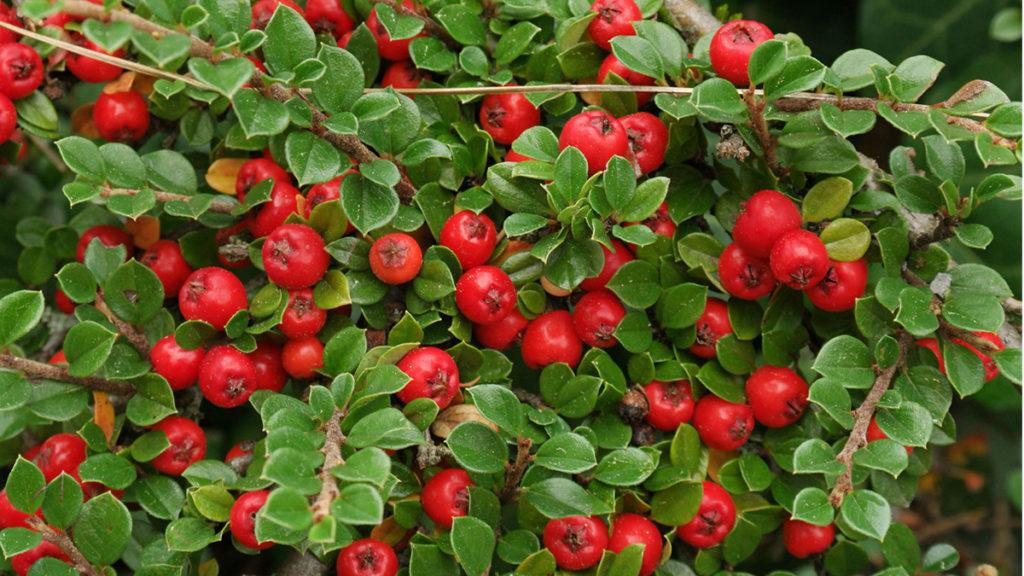
| Description | An outstanding groundcover with dense prostrate branches covered with shiny green, finely textured foliage. White blooms in spring are later followed with highly ornamental berries. Cooler fall temperatures bring on a purple tinge to the foliage that enhances the profusion of coral red berries. Evergreen. |
|---|---|
| Bloom Time | Late spring |
| Deciduous/Evergreen | Evergreen |
| Special Features | Fall Color, Ornamental Berries, Waterwise, Attracts Pollinators, Fast Growing, Benefits Birds |
| Problems/Solutions | Coastal Exposure, Deer Resistant, Erosion Control, Rabbit Resistant, Tolerates Urban Pollution, Road Salt Tolerant |
| Growth Rate | Fast |
| Growth Habit | Spreading |
| Flower Attributes | Showy Flowers |
| Landscape Use | Border, Ground Cover, Hillside |
| Design Ideas | Give this fine groundcover plenty of room to spread. Good on banks and to cover large open areas with a southern exposure. Great addition to a wildlife garden or to add year-round interest. |
| Flower Color | White |
| Foliage Color | Green |
| Foliage Fall Color | Purple |
| Companion Plants | Magnolia (Magnolia); Dogwood (Cornus); Cranberry Bush (Viburnum); Snowberry (Symphoricarpos); Juniper (Juniperus) |
| Care Instructions | Grows easily in average to poor, well-drained soils. Space 4 to 5 ft. apart as groundcover; control weeds with mulch until plants fill in. Water deeply and regularly during the first growing season to establish an extensive root system; reduce frequency once established. Apply fertilizer in early spring. May be pruned annually to shape. |
| History | Cotoneaster is a genus of woody shrubs native to Asia, Europe and North Africa. The dammeri species is native to central China.This plant is also commonly known as Chinese Bearberry because bear and deer like to feed on its berries in winter. |
Details
| Description | An outstanding groundcover with dense prostrate branches covered with shiny green, finely textured foliage. White blooms in spring are later followed with highly ornamental berries. Cooler fall temperatures bring on a purple tinge to the foliage that enhances the profusion of coral red berries. Evergreen. |
|---|---|
| Bloom Time | Late spring |
| Deciduous/Evergreen | Evergreen |
| Special Features | Fall Color, Ornamental Berries, Waterwise, Attracts Pollinators, Fast Growing, Benefits Birds |
| Problems/Solutions | Coastal Exposure, Deer Resistant, Erosion Control, Rabbit Resistant, Tolerates Urban Pollution, Road Salt Tolerant |
| Growth Rate | Fast |
| Growth Habit | Spreading |
| Flower Attributes | Showy Flowers |
Style
| Landscape Use | Border, Ground Cover, Hillside |
|---|---|
| Design Ideas | Give this fine groundcover plenty of room to spread. Good on banks and to cover large open areas with a southern exposure. Great addition to a wildlife garden or to add year-round interest. |
| Flower Color | White |
| Foliage Color | Green |
| Foliage Fall Color | Purple |
| Companion Plants | Magnolia (Magnolia); Dogwood (Cornus); Cranberry Bush (Viburnum); Snowberry (Symphoricarpos); Juniper (Juniperus) |
Care
| Care Instructions | Grows easily in average to poor, well-drained soils. Space 4 to 5 ft. apart as groundcover; control weeds with mulch until plants fill in. Water deeply and regularly during the first growing season to establish an extensive root system; reduce frequency once established. Apply fertilizer in early spring. May be pruned annually to shape. |
|---|
History
| History | Cotoneaster is a genus of woody shrubs native to Asia, Europe and North Africa. The dammeri species is native to central China.This plant is also commonly known as Chinese Bearberry because bear and deer like to feed on its berries in winter. |
|---|
Frequently asked questions
Does Coral Beauty Cotoneaster produce flowers?
Late spring
Is Coral Beauty Cotoneaster evergreen or deciduous?
Coral Beauty Cotoneaster is Evergreen.
What are the special features of Coral Beauty Cotoneaster?
Coral Beauty Cotoneaster is Fall Color, Ornamental Berries, Waterwise, Attracts Pollinators, Fast Growing, Benefits Birds.
Is Coral Beauty Cotoneaster resistant to pests or animals?
Coastal Exposure, Deer Resistant, Erosion Control, Rabbit Resistant, Tolerates Urban Pollution, Road Salt Tolerant
How fast does Coral Beauty Cotoneaster grow?
Coral Beauty Cotoneaster has a Fast growth rate.
What is the growth habit of Coral Beauty Cotoneaster?
Coral Beauty Cotoneaster grows in an Spreading habit.
Where can I use Coral Beauty Cotoneaster in my landscape?
Coral Beauty Cotoneaster is suitable for: Border, Ground Cover, Hillside.
How can I use Coral Beauty Cotoneaster in my garden design?
Give this fine groundcover plenty of room to spread. Good on banks and to cover large open areas with a southern exposure. Great addition to a wildlife garden or to add year-round interest.
What color are Coral Beauty Cotoneaster flowers?
Coral Beauty Cotoneaster produces White flowers.
What color is the foliage of Coral Beauty Cotoneaster?
Coral Beauty Cotoneaster has Green foliage.
What plants grow well with Coral Beauty Cotoneaster?
Good companion plants for Coral Beauty Cotoneaster include: Magnolia (Magnolia); Dogwood (Cornus); Cranberry Bush (Viburnum); Snowberry (Symphoricarpos); Juniper (Juniperus).
How do I care for Coral Beauty Cotoneaster?
Grows easily in average to poor, well-drained soils. Space 4 to 5 ft. apart as groundcover; control weeds with mulch until plants fill in. Water deeply and regularly during the first growing season to establish an extensive root system; reduce frequency once established. Apply fertilizer in early spring. May be pruned annually to shape.
What is the history of Coral Beauty Cotoneaster?
Cotoneaster is a genus of woody shrubs native to Asia, Europe and North Africa. The dammeri species is native to central China.This plant is also commonly known as Chinese Bearberry because bear and deer like to feed on its berries in winter.
Retailers Near You
About Us
We have been pioneers and craftsmen in the art of growing plants for 100 years. Since our founding in Southern California by Harry E. Rosedale, Sr. in 1926, we have been absolutely dedicated and obsessed with quality.
We have been pioneers and craftsmen in the art of growing plants for nearly 100 years. Since our founding in Southern California by Harry E. Rosedale, Sr. in 1926, we have been absolutely dedicated and obsessed with quality.