
You're growing in this Zip Code:
Change LocationDiscover Plants for Your Area
Diane Witch Hazel
Hamamelis x intermedia 'Diane'
Pronunciation: ham-a-ME-lis in-ter-MEE-dee-uh
SKU #03924
LIGHT:
Full sun
WATER:
Water when top 3 inches of soil is dry.
SIZE:
Moderate growing; reaches 8 to 12 ft. tall and wide.

Retailers Near You
Ready to Grow?
Ship Monrovia plants directly to your door. Browse a curated selection available online.
Shop Now >
| Description | Prized for its copper-red to red flowers, considered one of the best of the red flowering varieties. Rich, orange-red fall color. A popular European introduction. Deciduous. |
|---|---|
| Bloom Time | Winter |
| Deciduous/Evergreen | Deciduous |
| Special Features | Easy Care, Fall Color |
| Problems/Solutions | Erosion Control, Road Salt Tolerant |
| Growth Rate | Moderate |
| Growth Habit | Spreading |
| Flower Attributes | Fragrant, Showy Flowers |
| Landscape Use | Border, Hedge, Privacy Screen |
| Design Ideas | Witch hazel is an exceptional large native shrub for northern homesites. A perfect choice for breaking up long boundaries and fence lines. Makes unusual seasonal interest in out of the way walls of foundation planting. A real problem solver as understory beneath aged old shade trees. Naturally adapted to compositions of mixed woodlands of evergreens and deciduous forest trees. Let it go native in wild gardens among natives, grouped with other species from indigenous plant communities. Exceptionally valuable for transition zones separating cultivated landscapes from undisturbed wildlands. |
| Flower Color | Red |
| Foliage Color | Green |
| Foliage Fall Color | Red |
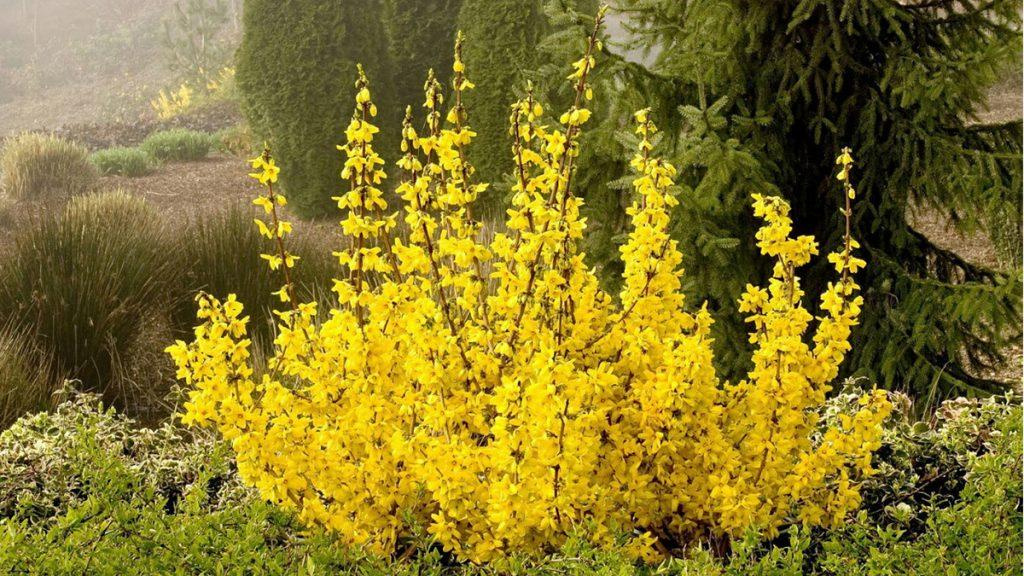
| Companion Plants | Flowering Quince (Chaenomeles); Forsythia (Forsythia); Witch Alder (Fothergilla); Serviceberry (Amelanchier); Sweetspire (Itea) |
| Care Instructions | Provide moderately acidic, organically rich, well-drained soil. Water deeply, regularly during the first growing season to establish an extensive root system; once established, reduce frequency. Apply a general purpose fertilizer before new growth begins in spring. Blooms heaviest on one- to three-year-old shoots. |
| History | The ancestors of this modern hybrid are both from Asia. One parent is the highly variable H. japonica, collected and classified by Von Siebold and introduced by the English nursery firm of Vietch and Sons. The other parent, H. mollis, is native to China and collected by Charles Maries in the district of Kukiang in 1879 while working for Veitch. The plant was not officially classified as x Hamamelis until the turn of the century when this new line of Asian witch hazels, not the native Hamamelis, were brought into American Gardens. |
| Lore | The American witch hazels were so named because they were used as dowsing rods by colonials who could not obtain the wood of their English hazel in the New World for that purpose. All species contain high tannin content and have been a part of the cosmetic industry as an old fashioned astringent known as witch hazel. Native Americans used it in dozens of remedies and as a valuable coagulant. |
Details
| Description | Prized for its copper-red to red flowers, considered one of the best of the red flowering varieties. Rich, orange-red fall color. A popular European introduction. Deciduous. |
|---|---|
| Bloom Time | Winter |
| Deciduous/Evergreen | Deciduous |
| Special Features | Easy Care, Fall Color |
| Problems/Solutions | Erosion Control, Road Salt Tolerant |
| Growth Rate | Moderate |
| Growth Habit | Spreading |
| Flower Attributes | Fragrant, Showy Flowers |
Style
| Landscape Use | Border, Hedge, Privacy Screen |
|---|---|
| Design Ideas | Witch hazel is an exceptional large native shrub for northern homesites. A perfect choice for breaking up long boundaries and fence lines. Makes unusual seasonal interest in out of the way walls of foundation planting. A real problem solver as understory beneath aged old shade trees. Naturally adapted to compositions of mixed woodlands of evergreens and deciduous forest trees. Let it go native in wild gardens among natives, grouped with other species from indigenous plant communities. Exceptionally valuable for transition zones separating cultivated landscapes from undisturbed wildlands. |
| Flower Color | Red |
| Foliage Color | Green |
| Foliage Fall Color | Red |
| Companion Plants | Flowering Quince (Chaenomeles); Forsythia (Forsythia); Witch Alder (Fothergilla); Serviceberry (Amelanchier); Sweetspire (Itea) |
Care
| Care Instructions | Provide moderately acidic, organically rich, well-drained soil. Water deeply, regularly during the first growing season to establish an extensive root system; once established, reduce frequency. Apply a general purpose fertilizer before new growth begins in spring. Blooms heaviest on one- to three-year-old shoots. |
|---|
History
| History | The ancestors of this modern hybrid are both from Asia. One parent is the highly variable H. japonica, collected and classified by Von Siebold and introduced by the English nursery firm of Vietch and Sons. The other parent, H. mollis, is native to China and collected by Charles Maries in the district of Kukiang in 1879 while working for Veitch. The plant was not officially classified as x Hamamelis until the turn of the century when this new line of Asian witch hazels, not the native Hamamelis, were brought into American Gardens. |
|---|---|
| Lore | The American witch hazels were so named because they were used as dowsing rods by colonials who could not obtain the wood of their English hazel in the New World for that purpose. All species contain high tannin content and have been a part of the cosmetic industry as an old fashioned astringent known as witch hazel. Native Americans used it in dozens of remedies and as a valuable coagulant. |
Frequently asked questions
Does Diane Witch Hazel produce flowers?
Winter
Is Diane Witch Hazel evergreen or deciduous?
Diane Witch Hazel is Deciduous.
What are the special features of Diane Witch Hazel?
Diane Witch Hazel is Easy Care, Fall Color.
Is Diane Witch Hazel resistant to pests or animals?
Erosion Control, Road Salt Tolerant
How fast does Diane Witch Hazel grow?
Diane Witch Hazel has a Moderate growth rate.
What is the growth habit of Diane Witch Hazel?
Diane Witch Hazel grows in an Spreading habit.
Where can I use Diane Witch Hazel in my landscape?
Diane Witch Hazel is suitable for: Border, Hedge, Privacy Screen.
How can I use Diane Witch Hazel in my garden design?
Witch hazel is an exceptional large native shrub for northern homesites. A perfect choice for breaking up long boundaries and fence lines. Makes unusual seasonal interest in out of the way walls of foundation planting. A real problem solver as understory beneath aged old shade trees. Naturally adapted to compositions of mixed woodlands of evergreens and deciduous forest trees. Let it go native in wild gardens among natives, grouped with other species from indigenous plant communities. Exceptionally valuable for transition zones separating cultivated landscapes from undisturbed wildlands.
What color are Diane Witch Hazel flowers?
Diane Witch Hazel produces Red flowers.
What color is the foliage of Diane Witch Hazel?
Diane Witch Hazel has Green foliage.
What plants grow well with Diane Witch Hazel?
Good companion plants for Diane Witch Hazel include: Flowering Quince (Chaenomeles); Forsythia (Forsythia); Witch Alder (Fothergilla); Serviceberry (Amelanchier); Sweetspire (Itea).
How do I care for Diane Witch Hazel?
Provide moderately acidic, organically rich, well-drained soil. Water deeply, regularly during the first growing season to establish an extensive root system; once established, reduce frequency. Apply a general purpose fertilizer before new growth begins in spring. Blooms heaviest on one- to three-year-old shoots.
What is the history of Diane Witch Hazel?
The ancestors of this modern hybrid are both from Asia. One parent is the highly variable H. japonica, collected and classified by Von Siebold and introduced by the English nursery firm of Vietch and Sons. The other parent, H. mollis, is native to China and collected by Charles Maries in the district of Kukiang in 1879 while working for Veitch. The plant was not officially classified as x Hamamelis until the turn of the century when this new line of Asian witch hazels, not the native Hamamelis, were brought into American Gardens.
Retailers Near You
About Us
We have been pioneers and craftsmen in the art of growing plants for 100 years. Since our founding in Southern California by Harry E. Rosedale, Sr. in 1926, we have been absolutely dedicated and obsessed with quality.
We have been pioneers and craftsmen in the art of growing plants for nearly 100 years. Since our founding in Southern California by Harry E. Rosedale, Sr. in 1926, we have been absolutely dedicated and obsessed with quality.