
You're growing in this Zip Code:
Discover Plants for Your Area
Leslie Roy Mesquite
Prosopis x 'Leslie Roy' PP #23,360
Pronunciation: PROS-oh-pis chil-EN-sis vel-oo-TEE-nuh)
SKU #09173
LIGHT:
Full sun, Partial sun
WATER:
Once established water deeply occasionally.
SIZE:
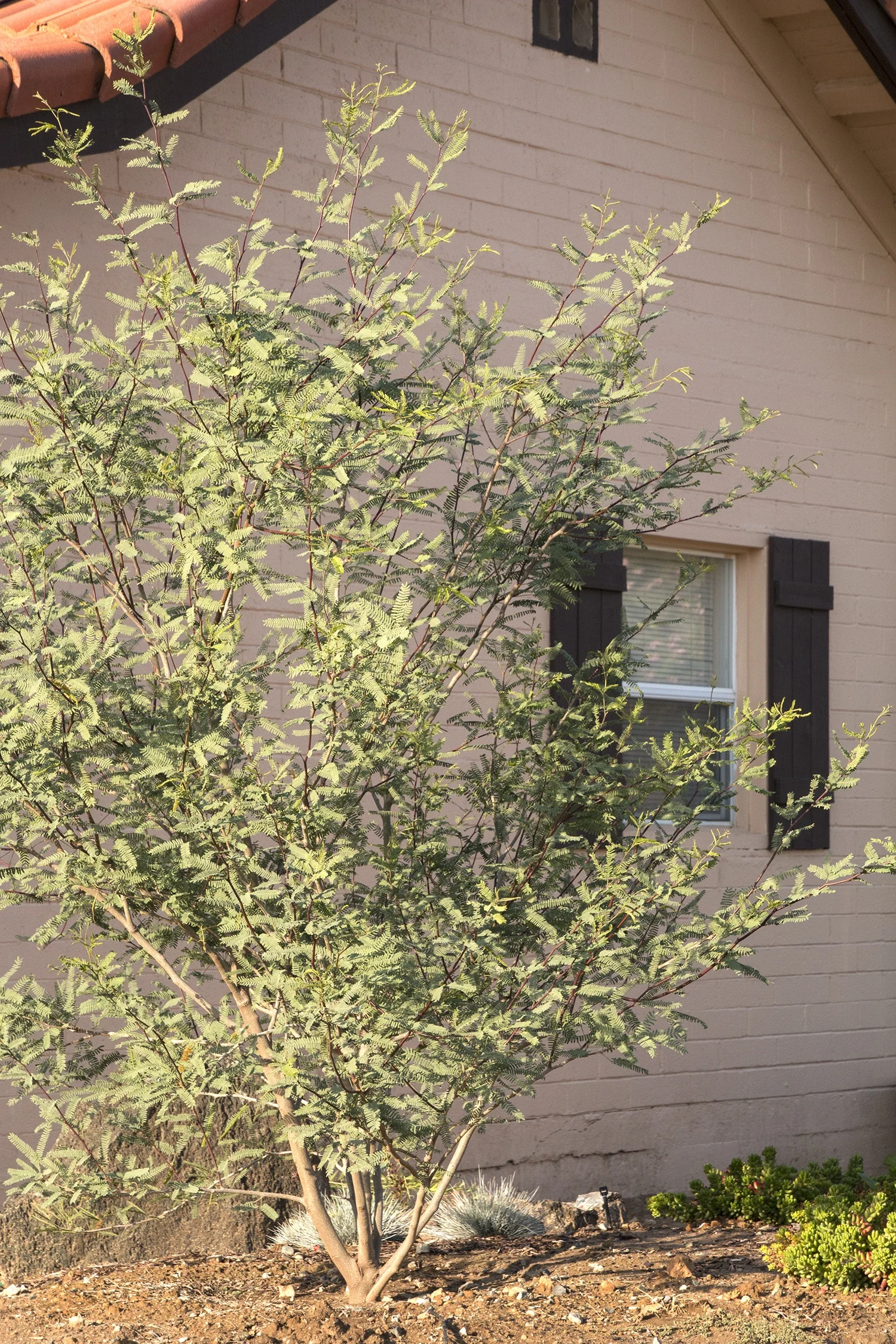
Fast growing; reaches 25 to 30 ft. tall and wide.

Retailers Near You
Ready to Grow?
Ship Monrovia plants directly to your door. Browse a curated selection available online.
Shop Now >This Plant's Growing Zones: 7-9
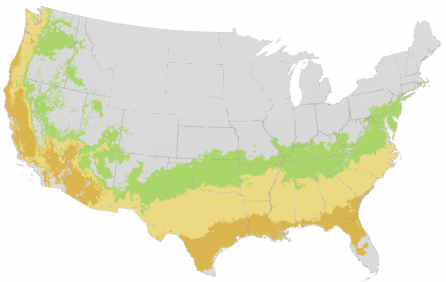
Your USDA Cold Hardiness Zone:
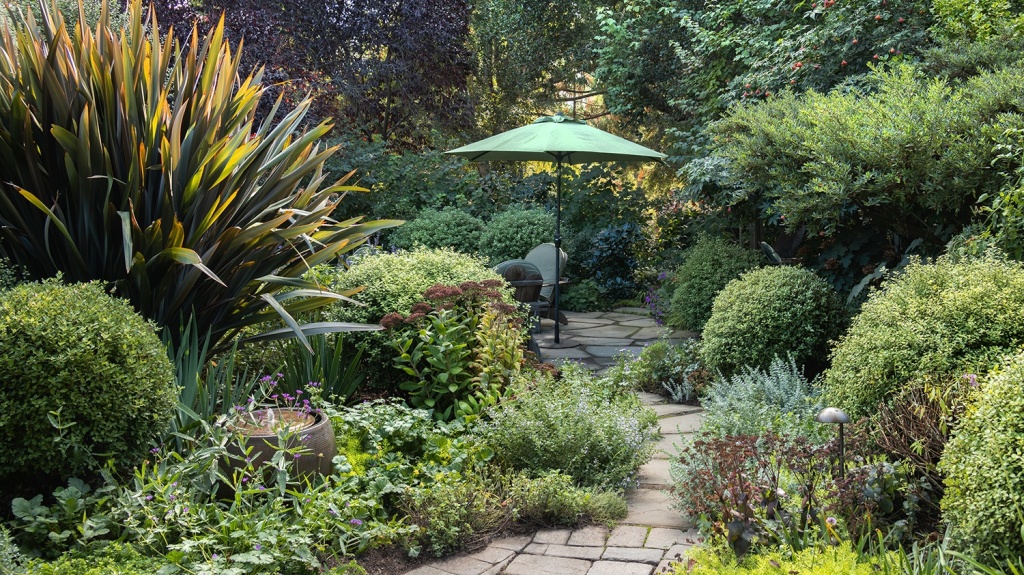
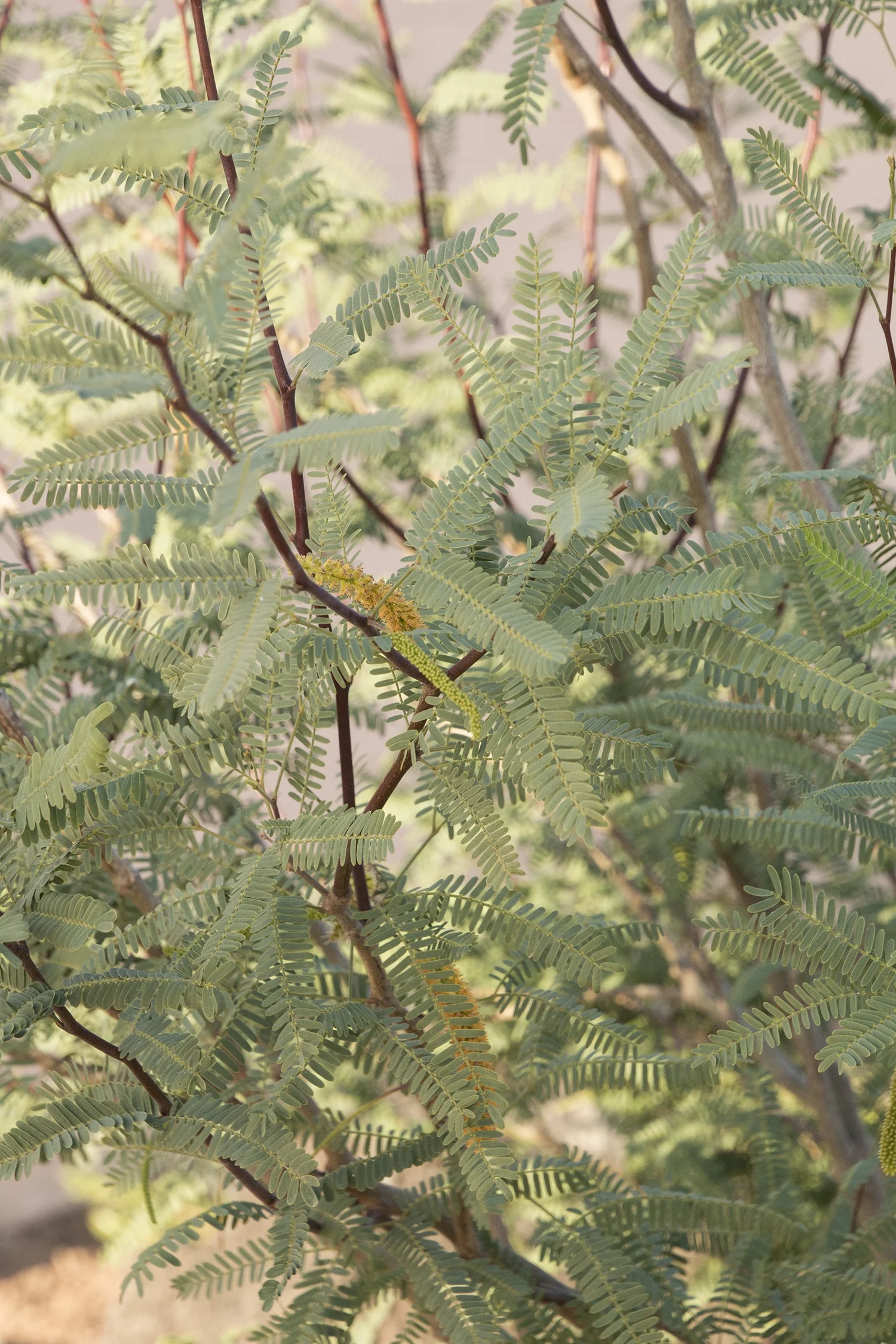
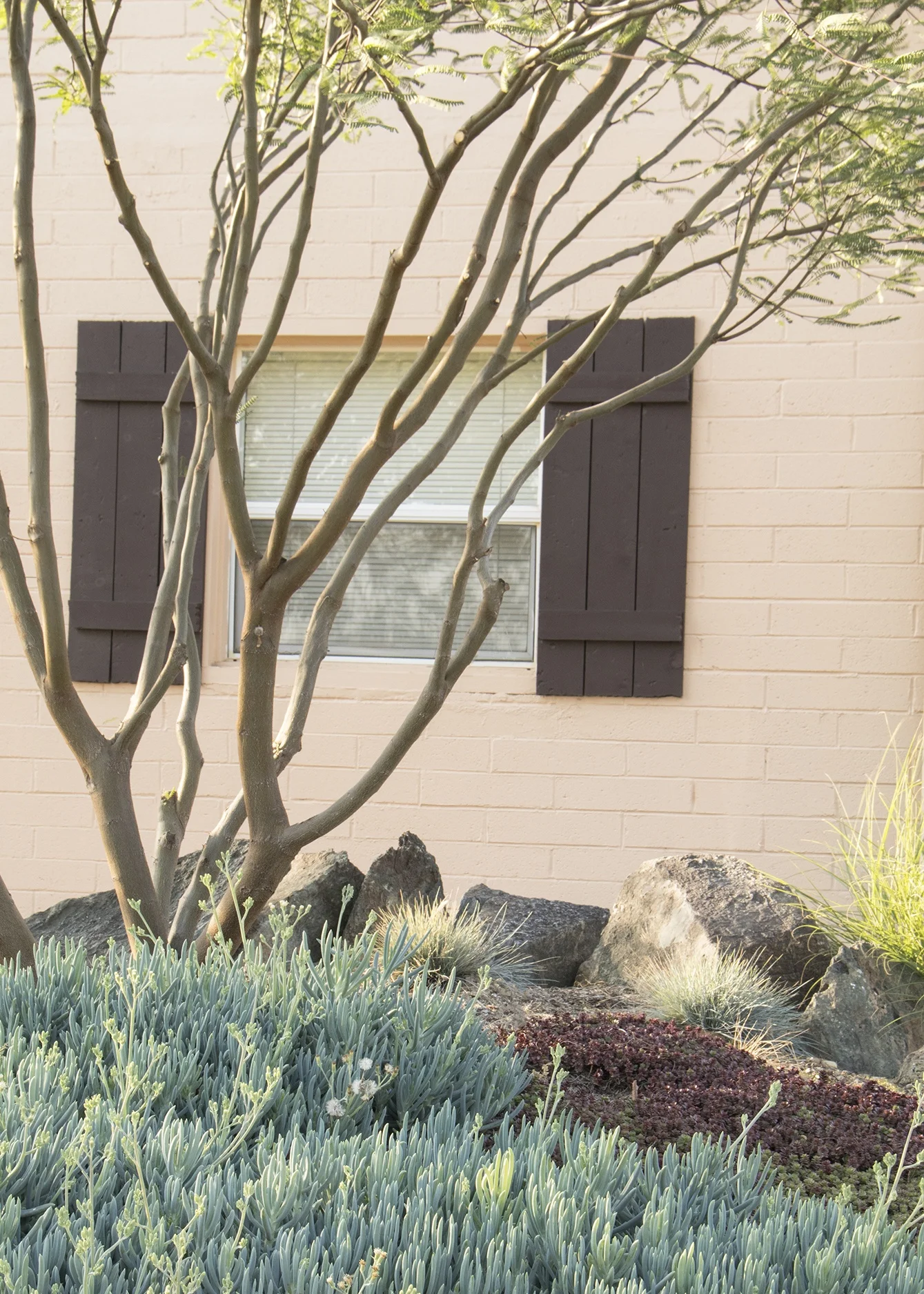
| Description | With the best traits of two desert trees, this remarkably thorn-free hybrid has a picturesque upright-branching habit. Blue-green, fern-like foliage casts welcome dappled shade beneath its canopy. A stunning, heat and drought tolerant accent perfectly suited for the arid Southwest and desert landscapes. Creamy white flowers in spring. Semi-evergreen. |
|---|---|
| Bloom Time | Spring |
| Deciduous/Evergreen | Semi-Evergreen |
| Special Features | Attractive Bark, Easy Care, Waterwise, Heat Loving, Fast Growing |
| Problems/Solutions | Erosion Control, Drought Tolerant |
| Growth Rate | Fast |
| Patent Act | Asexual reproduction of plants protected by the Plant Patent Act is prohibited during the life of the patent. |
| Landscape Use | Privacy Screen |
| Flower Color | White |
| Foliage Color | Blue-green |
| Companion Plants | Gramma Grass (Bouteloua); Texas Ranger (Leucophyllum); Prickly Pear (Opuntia); Fairy Duster (Calliandra); Rock Rose (Cistus); Mexican Bush Sage (Salvia leucantha) |
| Care Instructions | Thrives in lean to average, fast-draining soils. Water deeply, regularly during the first growing season to establish an extensive root system. Once established, water only occasionally, as needed to encourage vigor; over-watering causes structurally weak wood. Fertilize lightly when new growth begins in spring. |
| History | This hybrid mesquite is an introduction by Civano Nursery of Tuscan, Arizona. It is a cross between the hardy Native Mesquite (Prosopis velutin) and the thornless Chilean Mesquite, (Prosopis chilensis). The new plant was selected out of 300 trees that resulted from the cross pollination of an unnamed Prosopis chilensis and an unnamed Prosopis velutina, by inventor Nicholas Shipley. Asexual reproduction in a controlled environment by softwood cuttings taken in Tucson, Ariz., has shown the unique features of this new hybrid mesquite tree are stable and reproduced true to type in successive generations. U.S. Plant Patent PP23,360 was granted in January, 2013. |
| Lore | The genus Prosopis includes the famous native trees of the American Southwest that produce nutritious pods vital to the material culture of many Native American tribes within its range, used for both food fiber and implements. The Pima Indians of southern Arizona referred to the mesquite as the Tree of Life. The Chilean mesquite has been widely planted in the Southwest and readily cross pollinates with the native species. Spontaneous hybrids have appeared naturally which display qualities of both ancestors. Like many members of the legume family, mesquites have the ability to restore nitrogen to the soil. |
Details
| Description | With the best traits of two desert trees, this remarkably thorn-free hybrid has a picturesque upright-branching habit. Blue-green, fern-like foliage casts welcome dappled shade beneath its canopy. A stunning, heat and drought tolerant accent perfectly suited for the arid Southwest and desert landscapes. Creamy white flowers in spring. Semi-evergreen. |
|---|---|
| Bloom Time | Spring |
| Deciduous/Evergreen | Semi-Evergreen |
| Special Features | Attractive Bark, Easy Care, Waterwise, Heat Loving, Fast Growing |
| Problems/Solutions | Erosion Control, Drought Tolerant |
| Growth Rate | Fast |
| Patent Act | Asexual reproduction of plants protected by the Plant Patent Act is prohibited during the life of the patent. |
Style
| Landscape Use | Privacy Screen |
|---|---|
| Flower Color | White |
| Foliage Color | Blue-green |
| Companion Plants | Gramma Grass (Bouteloua); Texas Ranger (Leucophyllum); Prickly Pear (Opuntia); Fairy Duster (Calliandra); Rock Rose (Cistus); Mexican Bush Sage (Salvia leucantha) |
Care
| Care Instructions | Thrives in lean to average, fast-draining soils. Water deeply, regularly during the first growing season to establish an extensive root system. Once established, water only occasionally, as needed to encourage vigor; over-watering causes structurally weak wood. Fertilize lightly when new growth begins in spring. |
|---|
History
| History | This hybrid mesquite is an introduction by Civano Nursery of Tuscan, Arizona. It is a cross between the hardy Native Mesquite (Prosopis velutin) and the thornless Chilean Mesquite, (Prosopis chilensis). The new plant was selected out of 300 trees that resulted from the cross pollination of an unnamed Prosopis chilensis and an unnamed Prosopis velutina, by inventor Nicholas Shipley. Asexual reproduction in a controlled environment by softwood cuttings taken in Tucson, Ariz., has shown the unique features of this new hybrid mesquite tree are stable and reproduced true to type in successive generations. U.S. Plant Patent PP23,360 was granted in January, 2013. |
|---|---|
| Lore | The genus Prosopis includes the famous native trees of the American Southwest that produce nutritious pods vital to the material culture of many Native American tribes within its range, used for both food fiber and implements. The Pima Indians of southern Arizona referred to the mesquite as the Tree of Life. The Chilean mesquite has been widely planted in the Southwest and readily cross pollinates with the native species. Spontaneous hybrids have appeared naturally which display qualities of both ancestors. Like many members of the legume family, mesquites have the ability to restore nitrogen to the soil. |
Retailers Near You
About Us
We have been pioneers and craftsmen in the art of growing plants for 100 years. Since our founding in Southern California by Harry E. Rosedale, Sr. in 1926, we have been absolutely dedicated and obsessed with quality.
We have been pioneers and craftsmen in the art of growing plants for nearly 100 years. Since our founding in Southern California by Harry E. Rosedale, Sr. in 1926, we have been absolutely dedicated and obsessed with quality.