
You're growing in this Zip Code:
Change LocationDiscover Plants for Your Area
Golden Prince® Wintercreeper
Euonymus fortunei 'Monce'
Pronunciation: yoo-ON-ih-mus for-TU-ne-i
SKU #03430
LIGHT:
Full sun, Partial sun
WATER:
Water when top 3 inches of soil is dry.
SIZE:
Quickly reaches 1 to 2 ft. tall, 3 to 4 ft. wide; trailing stems can be trained upright.

Retailers Near You
Ready to Grow?
Ship Monrovia plants directly to your door. Browse a curated selection available online.
Shop Now >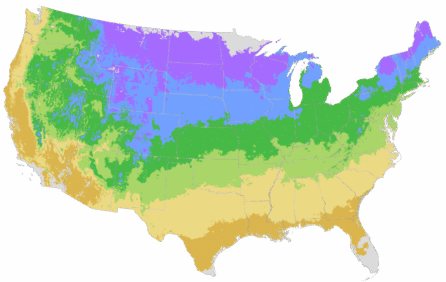
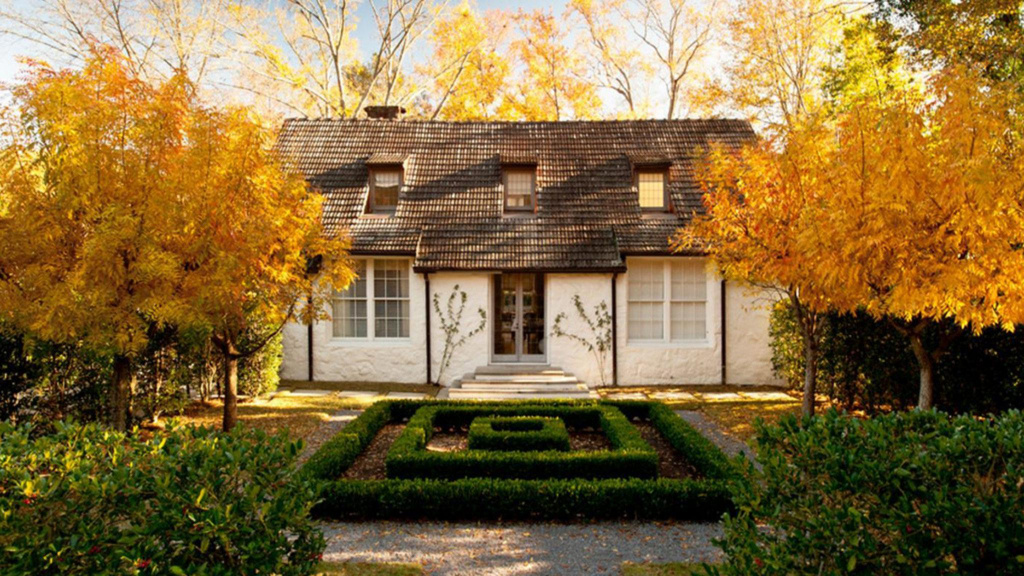
| Description | A low-growing, hardy and colorful evergreen shrub with striking, bright golden yellow-edged new foliage that matures to green, then develops rich winter color. Beautiful contrast in mixed borders. Well-suited for use as a groundcover, low hedge, or simply as a landscape accent. Spreading stems can be trained to climb up a wall or trellis. Evergreen |
|---|---|
| Bloom Time | Inconspicuous; prized for foliage. |
| Deciduous/Evergreen | Evergreen |
| Special Features | Dramatic Foliage Color, Easy Care, Waterwise, Fast Growing |
| Problems/Solutions | Coastal Exposure, Erosion Control, Drought Tolerant |
| Growth Rate | Fast |
| Patent Act | Asexual reproduction of plants protected by the Plant Patent Act is prohibited during the life of the patent. |
| Landscape Use | Border, Hedge |
| Design Ideas | One of the workhorse foundation plants to anchor the house to the landscape. Plant with consistent spacing to create a hardy, colorful, large scale groundcover that will provide colorful winter foliage when deciduous trees and shrubs are bare. Plant along walks and driveways, in mixed borders and massed as a hedge or barrier. Feature as a golden spring specimen in front of taller Lilac. |
| Flower Color | Green |
| Foliage Color | Variegated |
| Companion Plants | Juniper (Juniperus); Weigela (Weigela); Spirea (Spiraea); Potentilla (Potentilla); Boxwood (Buxus) |
| Care Instructions | Adaptable and easy to grow in average, well-drained soils; avoid poorly drained, soggy soils. Takes shade, particularly in hot climates. Water deeply, regularly in first growing season to establish root system. Once established, reduce frequency; tolerates mild drought. Fertilize in early spring. Prune annually to shape. |
| History | This plant was discovered as a sport of the upright Euonymus fortunei 'Sarcoxie' in August of 1960 by M. Leslie Hancock of Woodland Nurseries in Cooksville, Ontario, Canada. It was noted for traits that differentiated it from its parent: foliage with more pronounced yellow and green variegation, a more compact growth habit, and excellent cold hardiness; the new plant demonstrated the ability to withstand temperatures of 20 degrees below zero without dropping foliage. The plant does not produce like descendants from seed. Years of asexual propagation by cuttings demonstrated that all descendants had the same characteristics, proving that the plant was a new, distinct variety of Euonymus fortunei. The plant was assigned over to Monrovia Nursery by the inventor, and U.S. Plant Patent #3211 (now expired) was issued in June of 1972. |
Details
| Description | A low-growing, hardy and colorful evergreen shrub with striking, bright golden yellow-edged new foliage that matures to green, then develops rich winter color. Beautiful contrast in mixed borders. Well-suited for use as a groundcover, low hedge, or simply as a landscape accent. Spreading stems can be trained to climb up a wall or trellis. Evergreen |
|---|---|
| Bloom Time | Inconspicuous; prized for foliage. |
| Deciduous/Evergreen | Evergreen |
| Special Features | Dramatic Foliage Color, Easy Care, Waterwise, Fast Growing |
| Problems/Solutions | Coastal Exposure, Erosion Control, Drought Tolerant |
| Growth Rate | Fast |
| Patent Act | Asexual reproduction of plants protected by the Plant Patent Act is prohibited during the life of the patent. |
Style
| Landscape Use | Border, Hedge |
|---|---|
| Design Ideas | One of the workhorse foundation plants to anchor the house to the landscape. Plant with consistent spacing to create a hardy, colorful, large scale groundcover that will provide colorful winter foliage when deciduous trees and shrubs are bare. Plant along walks and driveways, in mixed borders and massed as a hedge or barrier. Feature as a golden spring specimen in front of taller Lilac. |
| Flower Color | Green |
| Foliage Color | Variegated |
| Companion Plants | Juniper (Juniperus); Weigela (Weigela); Spirea (Spiraea); Potentilla (Potentilla); Boxwood (Buxus) |
Care
| Care Instructions | Adaptable and easy to grow in average, well-drained soils; avoid poorly drained, soggy soils. Takes shade, particularly in hot climates. Water deeply, regularly in first growing season to establish root system. Once established, reduce frequency; tolerates mild drought. Fertilize in early spring. Prune annually to shape. |
|---|
History
| History | This plant was discovered as a sport of the upright Euonymus fortunei 'Sarcoxie' in August of 1960 by M. Leslie Hancock of Woodland Nurseries in Cooksville, Ontario, Canada. It was noted for traits that differentiated it from its parent: foliage with more pronounced yellow and green variegation, a more compact growth habit, and excellent cold hardiness; the new plant demonstrated the ability to withstand temperatures of 20 degrees below zero without dropping foliage. The plant does not produce like descendants from seed. Years of asexual propagation by cuttings demonstrated that all descendants had the same characteristics, proving that the plant was a new, distinct variety of Euonymus fortunei. The plant was assigned over to Monrovia Nursery by the inventor, and U.S. Plant Patent #3211 (now expired) was issued in June of 1972. |
|---|
Retailers Near You
About Us
We have been pioneers and craftsmen in the art of growing plants for 100 years. Since our founding in Southern California by Harry E. Rosedale, Sr. in 1926, we have been absolutely dedicated and obsessed with quality.
We have been pioneers and craftsmen in the art of growing plants for nearly 100 years. Since our founding in Southern California by Harry E. Rosedale, Sr. in 1926, we have been absolutely dedicated and obsessed with quality.