
You're growing in this Zip Code:
Change LocationDiscover Plants for Your Area
Plum Passion® Improved Hydrangea
Hydrangea aspera 'Monpulsel' PP #30,596
Pronunciation: hy-DRAIN-juh AS-per-uh
SKU #09655
LIGHT:
Filtered sun, Partial shade
WATER:
Keep soil moist, but not soggy.
SIZE:
Moderate growing; reaches 5 to 6 ft. tall and wide.

Retailers Near You
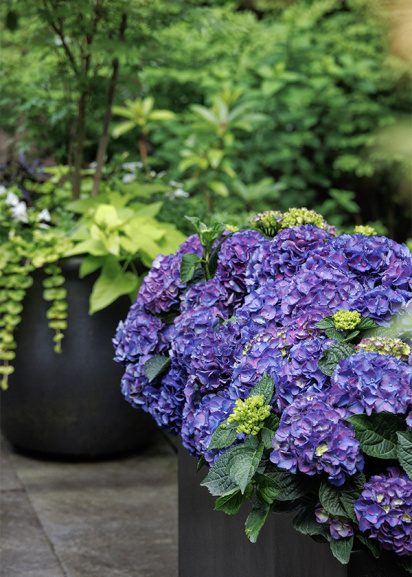
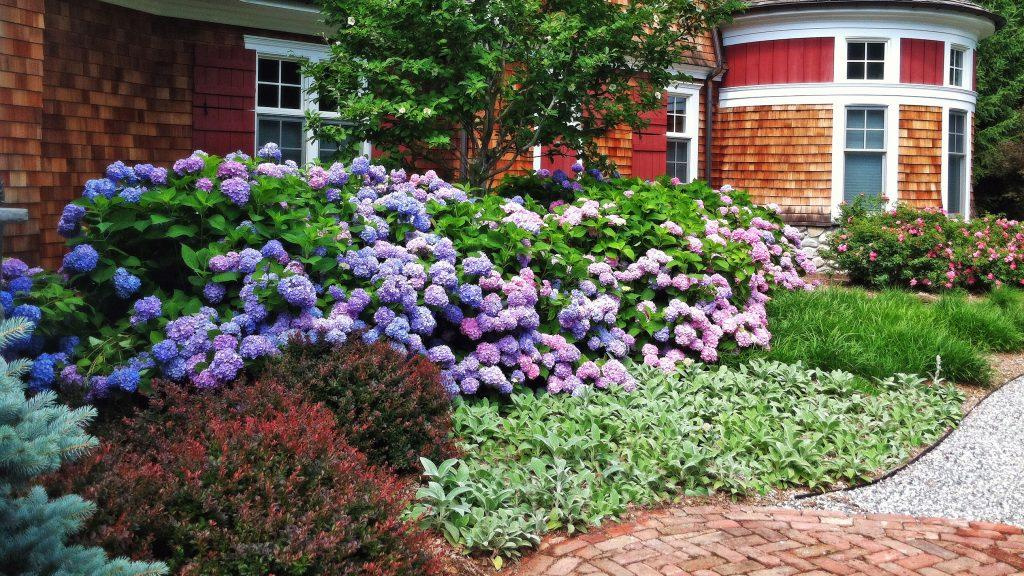
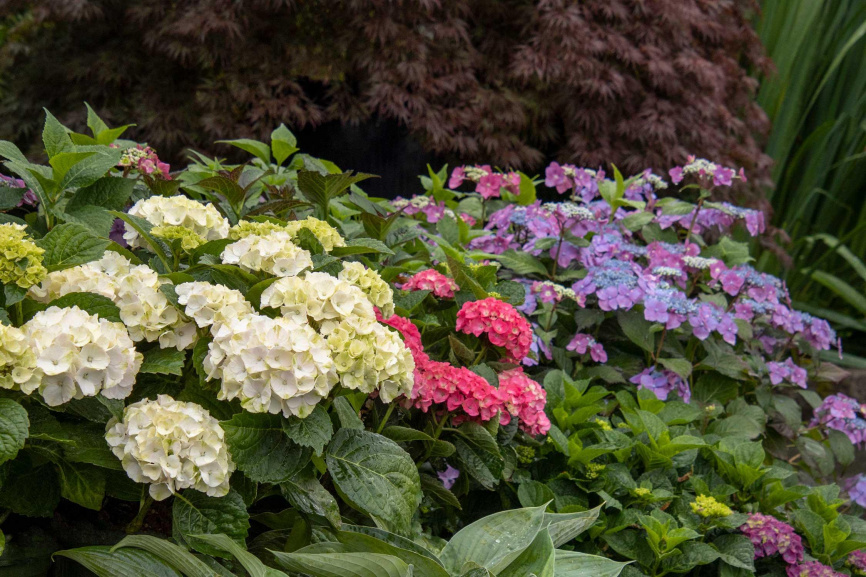
| Description | A delightful, densely branched hydrangea with green-purple new foliage that ages to a deep purple with rosy purple undersides and is contrasted nicely by bicolor lacecap summer blooms. Captivating fall foliage develops golden topsides, while retaining its purple undersides. A wonderful accent for shady borders and cottage gardens. Deciduous. |
|---|---|
| Bloom Time | Summer |
| Deciduous/Evergreen | Deciduous |
| Special Features | Dramatic Foliage Color, Easy Care, Attracts Pollinators |
| Growth Rate | Moderate |
| Flower Attributes | Flowers for Cutting, Showy Flowers |
| Patent Act | Asexual reproduction of plants protected by the Plant Patent Act is prohibited during the life of the patent. |
| Landscape Use | Border, Container |
| Flower Color | Purplish-pink |
| Foliage Color | Purple |
| Companion Plants | Japanese Maple (Acer palmatum); Azalea (Azalea); Hosta (Hosta); Holly (Ilex); Camellia (Camellia); Anemone (Anemone); Holly (Ilex);Rhododendron (Rhododendron) |
| Care Instructions | Provide fertile, lightly acidic, moist, well-drained soil with part or dappled shade. Tolerates more sun in cooler climates; avoid harsh sun exposures. Water deeply, regularly in first growing season to establish extensive root system. Apply balanced fertilizer monthly during growing season. Clip spent flowers to promote continued bloom. |
| History | The first-ever purple-leaved hydrangea cultivated for American Gardens, Plum Passion® Hydrangea (Hydrangea asper), was discovered by Mikinori Ogisu in China and brought to the U.S. by renowned plant explorer Dan Hinkley, introduced by Monrovia. Plum Passion® Improved (H. aspera 'Monpulsel' PPAF) is the product of a breeding program under the direction of Richard Wells in at Monrovia Nursery in Dayton, Oregon. An outstanding selection made from an array of seedlings in May 2013, the new variety has slightly larger flowers and heavier foliage, and exhibits a dense branching habit, giving it a more compact form than its parent plant. U.S. Plant Patent #30,596 was issued on July 25, 2019. |
| Lore | H. aspera is a shrub native to the region between the Himalaya, across southern China, to Taiwan. Considerable natural variation occurs within the species, and some of the variations are sometimes considered to be separate species; these include H. villosa and H. aspera ssp. sargentiana. |
Details
| Description | A delightful, densely branched hydrangea with green-purple new foliage that ages to a deep purple with rosy purple undersides and is contrasted nicely by bicolor lacecap summer blooms. Captivating fall foliage develops golden topsides, while retaining its purple undersides. A wonderful accent for shady borders and cottage gardens. Deciduous. |
|---|---|
| Bloom Time | Summer |
| Deciduous/Evergreen | Deciduous |
| Special Features | Dramatic Foliage Color, Easy Care, Attracts Pollinators |
| Growth Rate | Moderate |
| Flower Attributes | Flowers for Cutting, Showy Flowers |
| Patent Act | Asexual reproduction of plants protected by the Plant Patent Act is prohibited during the life of the patent. |
Style
| Landscape Use | Border, Container |
|---|---|
| Flower Color | Purplish-pink |
| Foliage Color | Purple |
| Companion Plants | Japanese Maple (Acer palmatum); Azalea (Azalea); Hosta (Hosta); Holly (Ilex); Camellia (Camellia); Anemone (Anemone); Holly (Ilex);Rhododendron (Rhododendron) |
Care
| Care Instructions | Provide fertile, lightly acidic, moist, well-drained soil with part or dappled shade. Tolerates more sun in cooler climates; avoid harsh sun exposures. Water deeply, regularly in first growing season to establish extensive root system. Apply balanced fertilizer monthly during growing season. Clip spent flowers to promote continued bloom. |
|---|
History
| History | The first-ever purple-leaved hydrangea cultivated for American Gardens, Plum Passion® Hydrangea (Hydrangea asper), was discovered by Mikinori Ogisu in China and brought to the U.S. by renowned plant explorer Dan Hinkley, introduced by Monrovia. Plum Passion® Improved (H. aspera 'Monpulsel' PPAF) is the product of a breeding program under the direction of Richard Wells in at Monrovia Nursery in Dayton, Oregon. An outstanding selection made from an array of seedlings in May 2013, the new variety has slightly larger flowers and heavier foliage, and exhibits a dense branching habit, giving it a more compact form than its parent plant. U.S. Plant Patent #30,596 was issued on July 25, 2019. |
|---|---|
| Lore | H. aspera is a shrub native to the region between the Himalaya, across southern China, to Taiwan. Considerable natural variation occurs within the species, and some of the variations are sometimes considered to be separate species; these include H. villosa and H. aspera ssp. sargentiana. |
Retailers Near You
About Us
We have been pioneers and craftsmen in the art of growing plants for 100 years. Since our founding in Southern California by Harry E. Rosedale, Sr. in 1926, we have been absolutely dedicated and obsessed with quality.
We have been pioneers and craftsmen in the art of growing plants for nearly 100 years. Since our founding in Southern California by Harry E. Rosedale, Sr. in 1926, we have been absolutely dedicated and obsessed with quality.