
You're growing in this Zip Code:
Change LocationDiscover Plants for Your Area
Yukon Belle® Pyracantha
Pyracantha angustifolia 'Monon'
Pronunciation: py-ra-KAN-tha an-gus-tee-FOH-lee-uh
SKU #06770
LIGHT:
Full sun
WATER:
Once established water deeply occasionally.
SIZE:
Quickly reaches 8 to 10 ft. tall, 6 to 8 ft. wide, in natural form.

Retailers Near You
Ready to Grow?
Ship Monrovia plants directly to your door. Browse a curated selection available online.
Shop Now >
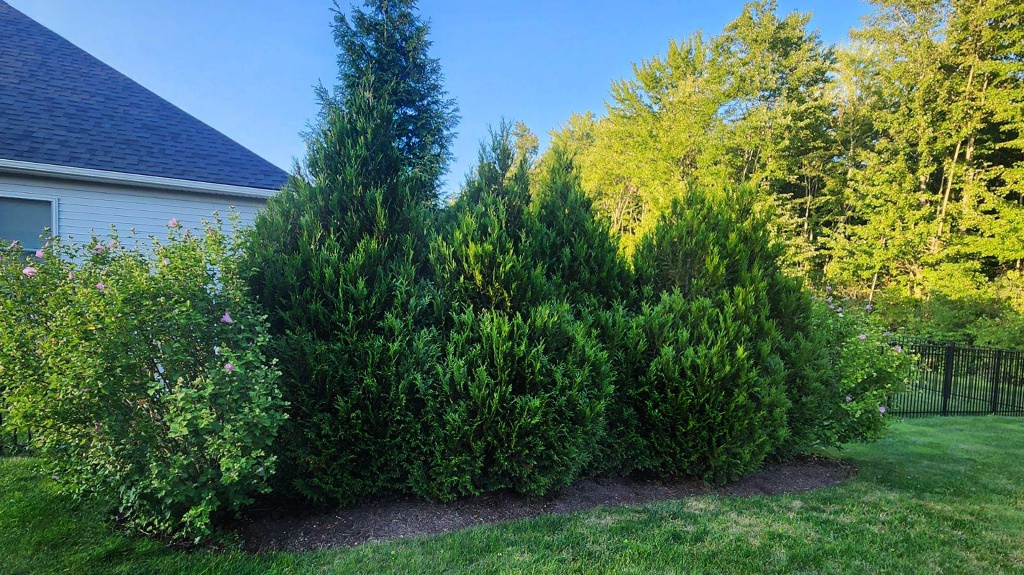


| Description | A hardy evergreen to semi-evergreen shrub prized for its mid-winter color. Abundant white blooms backed by narrow, glossy, dark green foliage are followed by bright orange berries that persist into winter. A favorite nesting spot for birds. Perfect for use as a barrier hedge or screen. |
|---|---|
| Bloom Time | Spring |
| Deciduous/Evergreen | Evergreen |
| Special Features | Easy Care, Ornamental Berries, Fast Growing, Benefits Birds |
| Problems/Solutions | Deer Resistant, Rabbit Resistant |
| Growth Rate | Fast |
| Growth Habit | Upright |
| Flower Attributes | Fragrant, Showy Flowers |
| Landscape Use | Barrier, Border, Espalier, Hedge, Privacy Screen, Windbreak, Suitable for Topiary |
| Design Ideas | Use this handsome shrub services primarily as hedging material in areas of difficult climates. It's naturally thorny branches make it a valuable security barrier against intruders and larger animals. Use it for perimeters or as a visual barrier in sideyards. Abundance of bright berries are relished by birds so plants serve a valuable role in habitat gardens. Tolerance of shearing takes on a more formal hedge and plants are highly adaptable to flat wall espalier in the traditional French method. Also well suited to gardens of crafters and flower arrangers who use with winter berries for decorating. |
| Flower Color | White |
| Foliage Color | Green |
| Companion Plants | Pampas Grass (Cortederia); Weigela (Weigela); Beautyberry (Callicarpa); Ninebark (Physocarpus); Chokeberry (Aronia) |
| Care Instructions | Grows easily in average, well-drained soil with medium to slightly dry moisture levels. Water deeply, regularly during first growing season to establish an extensive root system; reduce frequency, once established. Apply fertilizer before new growth begins in spring. For a tidy, neat appearance, prune annually to shape. |
| History | This cultivar was developed by Monrovia Nursery Co. in 1985. It belongs to a large group of shrubs in the Rose family and closely related to both hawthorn and cotoneaster. The genus was classified by Max Roemer of Germany in the mid 19th Century, who named it from the Greek for fire and thorn to describe red fruits and spiny branches. This species was first assigned as Cotoneaster angustifolia by Adrien Franchet, 1834-1900 of the Jardin des Plantes, Paris. It was corrected in the 20th century by Camilio Schneider of Germany. This species is native to China and no doubt reached Franchet through French Jesuits who botanized this new territory sending their discoveries to Paris rather than Kew. |
| Lore | As a member of the same family as apples, pyracantha berries are quite similar albiet smaller. They're edible, although not particularly tasty and have been used to make jelly and even home made wine. |
Details
| Description | A hardy evergreen to semi-evergreen shrub prized for its mid-winter color. Abundant white blooms backed by narrow, glossy, dark green foliage are followed by bright orange berries that persist into winter. A favorite nesting spot for birds. Perfect for use as a barrier hedge or screen. |
|---|---|
| Bloom Time | Spring |
| Deciduous/Evergreen | Evergreen |
| Special Features | Easy Care, Ornamental Berries, Fast Growing, Benefits Birds |
| Problems/Solutions | Deer Resistant, Rabbit Resistant |
| Growth Rate | Fast |
| Growth Habit | Upright |
| Flower Attributes | Fragrant, Showy Flowers |
Style
| Landscape Use | Barrier, Border, Espalier, Hedge, Privacy Screen, Windbreak, Suitable for Topiary |
|---|---|
| Design Ideas | Use this handsome shrub services primarily as hedging material in areas of difficult climates. It's naturally thorny branches make it a valuable security barrier against intruders and larger animals. Use it for perimeters or as a visual barrier in sideyards. Abundance of bright berries are relished by birds so plants serve a valuable role in habitat gardens. Tolerance of shearing takes on a more formal hedge and plants are highly adaptable to flat wall espalier in the traditional French method. Also well suited to gardens of crafters and flower arrangers who use with winter berries for decorating. |
| Flower Color | White |
| Foliage Color | Green |
| Companion Plants | Pampas Grass (Cortederia); Weigela (Weigela); Beautyberry (Callicarpa); Ninebark (Physocarpus); Chokeberry (Aronia) |
Care
| Care Instructions | Grows easily in average, well-drained soil with medium to slightly dry moisture levels. Water deeply, regularly during first growing season to establish an extensive root system; reduce frequency, once established. Apply fertilizer before new growth begins in spring. For a tidy, neat appearance, prune annually to shape. |
|---|
History
| History | This cultivar was developed by Monrovia Nursery Co. in 1985. It belongs to a large group of shrubs in the Rose family and closely related to both hawthorn and cotoneaster. The genus was classified by Max Roemer of Germany in the mid 19th Century, who named it from the Greek for fire and thorn to describe red fruits and spiny branches. This species was first assigned as Cotoneaster angustifolia by Adrien Franchet, 1834-1900 of the Jardin des Plantes, Paris. It was corrected in the 20th century by Camilio Schneider of Germany. This species is native to China and no doubt reached Franchet through French Jesuits who botanized this new territory sending their discoveries to Paris rather than Kew. |
|---|---|
| Lore | As a member of the same family as apples, pyracantha berries are quite similar albiet smaller. They're edible, although not particularly tasty and have been used to make jelly and even home made wine. |
Retailers Near You
About Us
We have been pioneers and craftsmen in the art of growing plants for 100 years. Since our founding in Southern California by Harry E. Rosedale, Sr. in 1926, we have been absolutely dedicated and obsessed with quality.
We have been pioneers and craftsmen in the art of growing plants for nearly 100 years. Since our founding in Southern California by Harry E. Rosedale, Sr. in 1926, we have been absolutely dedicated and obsessed with quality.