
You're growing in this Zip Code:
Discover Plants for Your Area
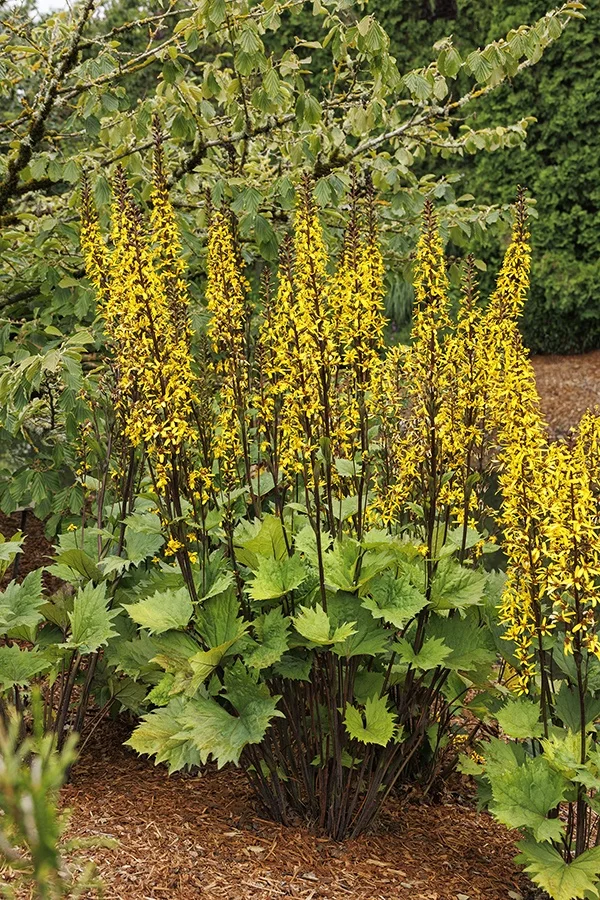
Little Rocket Leopard Plant
Ligularia stenocephala 'Little Rocket'
Pronunciation: lig-yoo-LAR-ee-uh sten-oh-SEF-ah-luh
SKU #09236
LIGHT:
Partial sun
WATER:
Keep soil moist to wet.
SIZE:
Moderate growing; reaches 3 to 4 ft. tall, 4 ft. wide.

Retailers Near You
Ready to Grow?
Ship Monrovia plants directly to your door. Browse a curated selection available online.
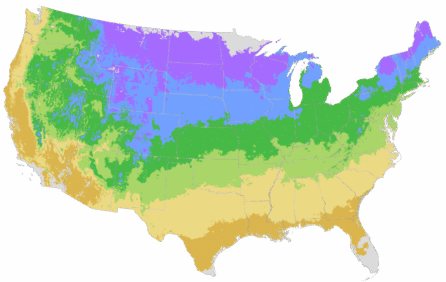
Shop Now >This Plant's Growing Zones: 4-9
Your USDA Cold Hardiness Zone:
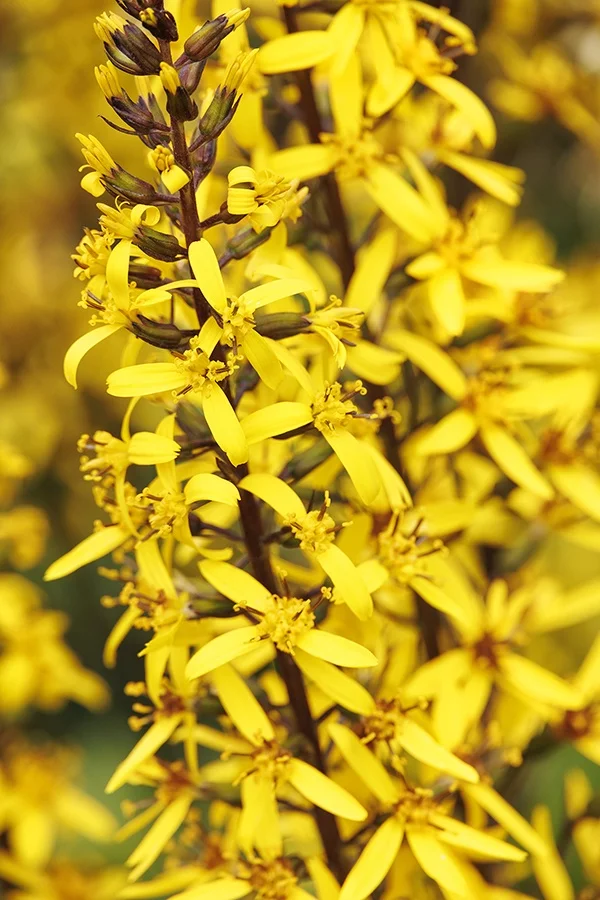
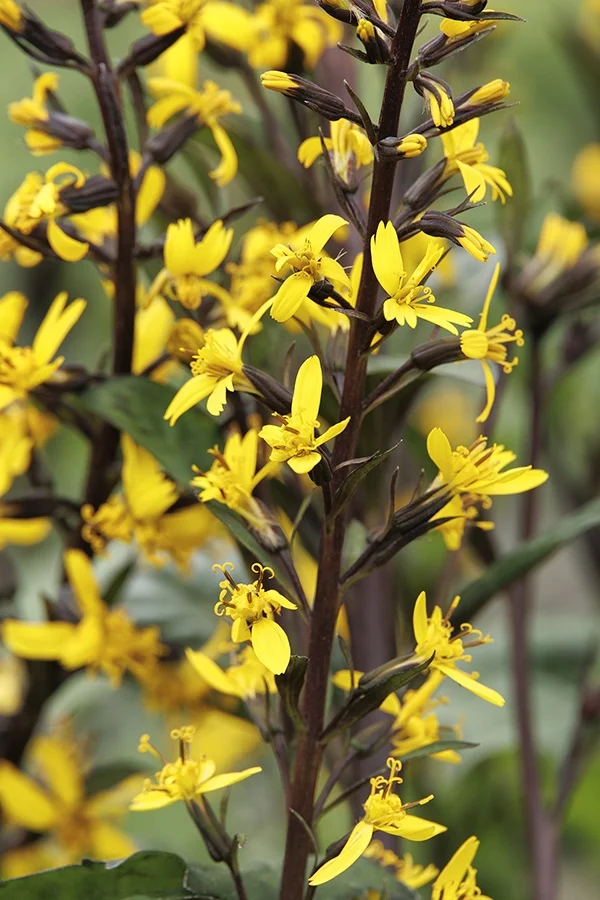
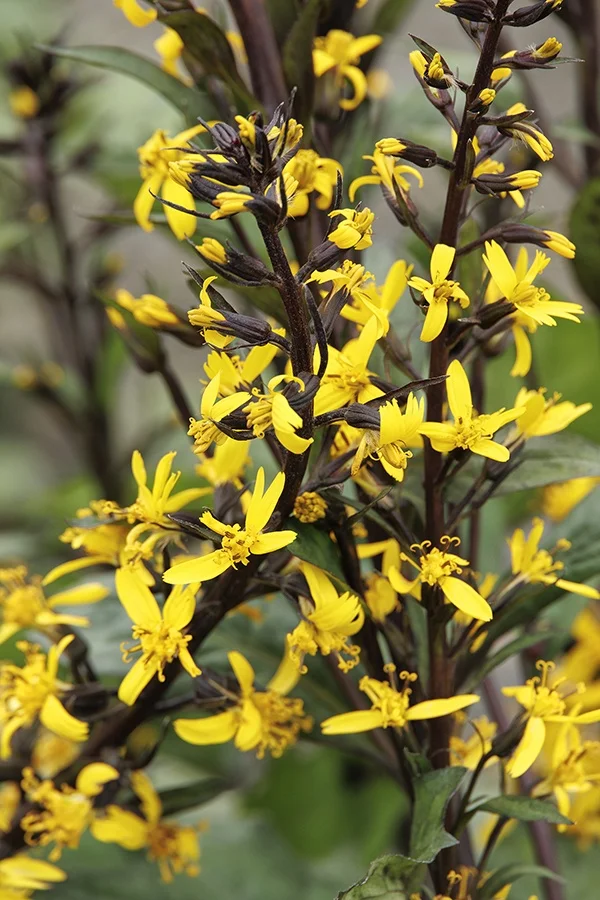
| Description | A fairly compact selection well-suited to smaller gardens, with large, jagged-edged green leaves. Long, purple-black spikes encrusted with bright yellow, daisy-like flowers are displayed well above the foliage. A great choice for specimen plantings or large tub or container use in the patio or pool area. An herbaceous perennial. |
|---|---|
| Bloom Time | Midsummer |
| Deciduous/Evergreen | Herbaceous |
| Special Features | Easy Care, Attracts Pollinators, Compact Form |
| Problems/Solutions | Rabbit Resistant |
| Growth Rate | Moderate |
| Flower Attributes | Flowers for Cutting, Showy Flowers |
| Patent Act | Asexual reproduction of plants protected by the Plant Patent Act is prohibited during the life of the patent. |
| Landscape Use | Border, Container |
| Flower Color | Yellow |
| Foliage Color | Green |
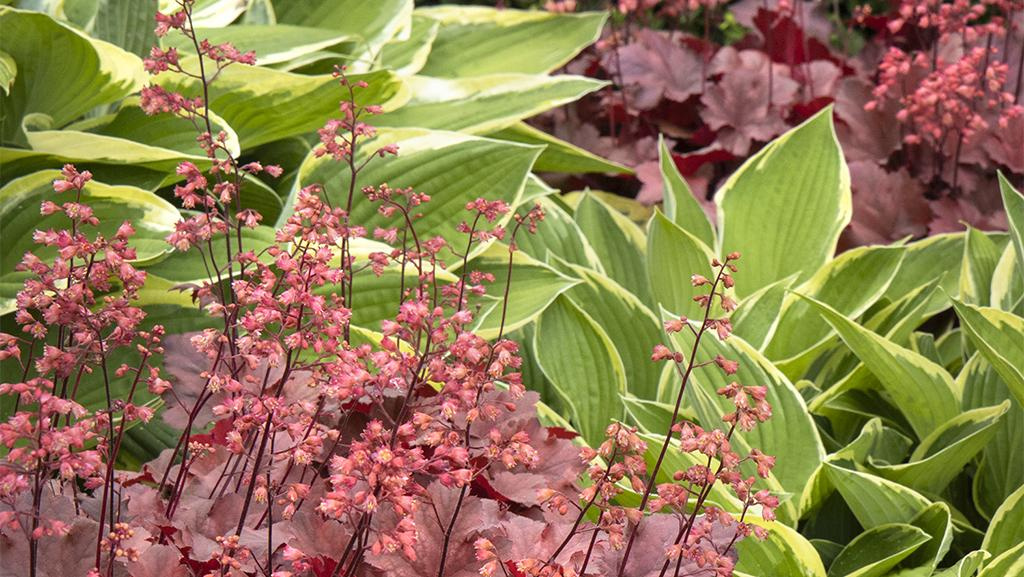
| Companion Plants | Coral Bells (Heuchera); Lenten Rose (Helleborus); Lungwort (Pulmonaria); Bleeding Heart (Dicentra); Hosta (Hosta) |
| Care Instructions | Thrives in deep, fertile, damp soils. Follow a regular watering schedule during the growing season to establish a deep, extensive root system; prefers constantly moist conditions. Prune old flower heads to encourage more blossoms. Feed with a general purpose fertilizer before new growth begins in spring. Clumps may be divided every 2 to 3 years. |
Details
| Description | A fairly compact selection well-suited to smaller gardens, with large, jagged-edged green leaves. Long, purple-black spikes encrusted with bright yellow, daisy-like flowers are displayed well above the foliage. A great choice for specimen plantings or large tub or container use in the patio or pool area. An herbaceous perennial. |
|---|---|
| Bloom Time | Midsummer |
| Deciduous/Evergreen | Herbaceous |
| Special Features | Easy Care, Attracts Pollinators, Compact Form |
| Problems/Solutions | Rabbit Resistant |
| Growth Rate | Moderate |
| Flower Attributes | Flowers for Cutting, Showy Flowers |
| Patent Act | Asexual reproduction of plants protected by the Plant Patent Act is prohibited during the life of the patent. |
Style
| Landscape Use | Border, Container |
|---|---|
| Flower Color | Yellow |
| Foliage Color | Green |
| Companion Plants | Coral Bells (Heuchera); Lenten Rose (Helleborus); Lungwort (Pulmonaria); Bleeding Heart (Dicentra); Hosta (Hosta) |
Care
| Care Instructions | Thrives in deep, fertile, damp soils. Follow a regular watering schedule during the growing season to establish a deep, extensive root system; prefers constantly moist conditions. Prune old flower heads to encourage more blossoms. Feed with a general purpose fertilizer before new growth begins in spring. Clumps may be divided every 2 to 3 years. |
|---|
Retailers Near You
About Us
We have been pioneers and craftsmen in the art of growing plants for 100 years. Since our founding in Southern California by Harry E. Rosedale, Sr. in 1926, we have been absolutely dedicated and obsessed with quality.
We have been pioneers and craftsmen in the art of growing plants for nearly 100 years. Since our founding in Southern California by Harry E. Rosedale, Sr. in 1926, we have been absolutely dedicated and obsessed with quality.